
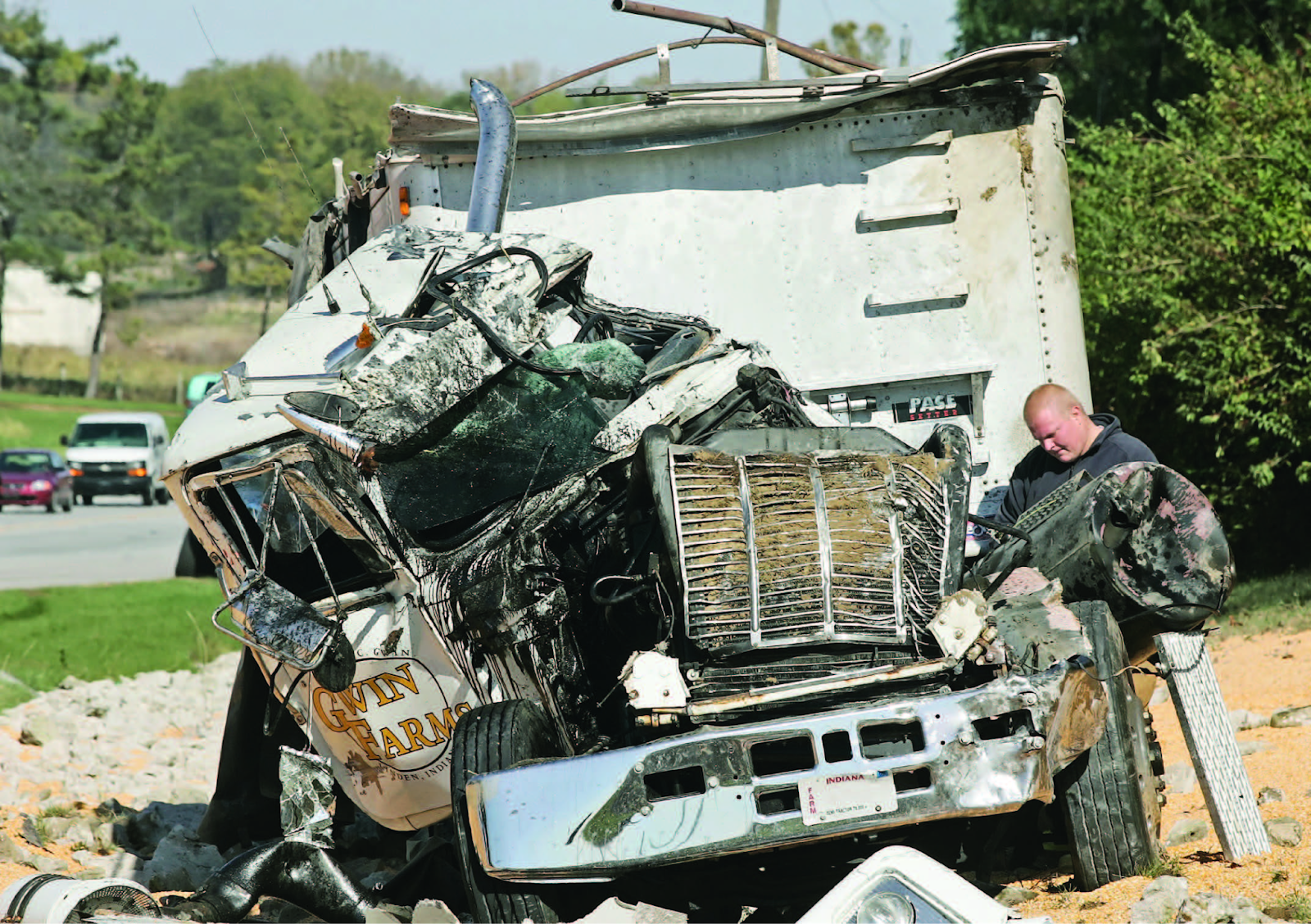
For an owner-operator, a truck accident is never just a moment on the road. It is a chain reaction that spreads through finances, insurance records, operational stability, and long-term business viability. However, unlike company drivers, owner-operators take the full hit of the economic impact from an accident directly.
From a business perspective, owner operator accident cost is not limited to visible damage but includes long-term operational and financial consequences.
A truck accident happens now and then; a direct collision results in visible damages, such as a dented bumper or a bowed trailer frame that can just as easily turn into a chain of events like having no income, a rise in insurance premiums, and even revoked contracts.
In trucking, this type of trucking accident expense often continues long after the truck leaves the repair shop.
Costing a driver out in a truck accident is a common problem. The hidden costs of accidents experienced by owner-operators result from cascading effects not only on the original injuries. Insurance deductibles, lost opportunities, litigation exposure, and operational stoppages are typical results of these incidents and in many cases, they surpass physical property damages.
These factors directly affect lost revenue, even when the accident itself appears minor.
Cost Breakdown After a Truck Accident
| Cost Category | Description |
| Truck repair cost | Structural damage, drivetrain issues, electronic system repairs |
| Accident related repairs | Sensors, braking systems, safety equipment replacement |
| Insurance deductibles | Out-of-pocket costs before coverage applies |
| Insurance premium increase | Higher rates at renewal after a claim |
| Truck downtime | Days or weeks without revenue while repairs are completed |
| Lost income | Missed loads and canceled trips |
| Vehicle replacement | Forced purchase or lease if truck is totaled |
| Medical expenses | Injury treatment not fully covered by insurance |
It is almost impossible for independent trucker operators to function and survive without having a clear picture of how much a trucking accident could cost them, especially when lost income continues during downtime.
In this article, the realities of the cost of an accident for an owner-operator are examined, including the implications for insurance, the toll on the time of the shipper and the potential for contract termination, and the regulatory exposure arising from the authority and FMCSA oversight.
This analysis also considers medical expenses, downtime, and long-term business impact.
The Reason Accidents Drop Owner-Operators Harder Than Fleets
Carriers operate on a wider basis, that is, carrying on risk across many trucks. This is not available to owner-operators. A truck out of circulation is a total loss of income. One truck that stops moving goods means the operator does not make money for that period.
For an independent driver, truck downtime immediately equals zero cash flow.
It’s a direct result of lost miles as well as a trucker’s insurance profile that suffers from the accident. Claims make premiums go up, get policies rescinded, and reviews triggered.
This directly impacts insurance premium calculations and future policy eligibility.
This is not the only reason owner-operators must deal with commercial auto insurance, liability coverage, and compliance all by themselves as opposed to the company drivers.
Managing commercial auto insurance and multiple coverage layers becomes a critical survival skill after an accident.
A single accident is enough to turn the road of a truck carrier to darkness, especially when recovery costs exceed short-term savings.
Repairs and Equipment Damages
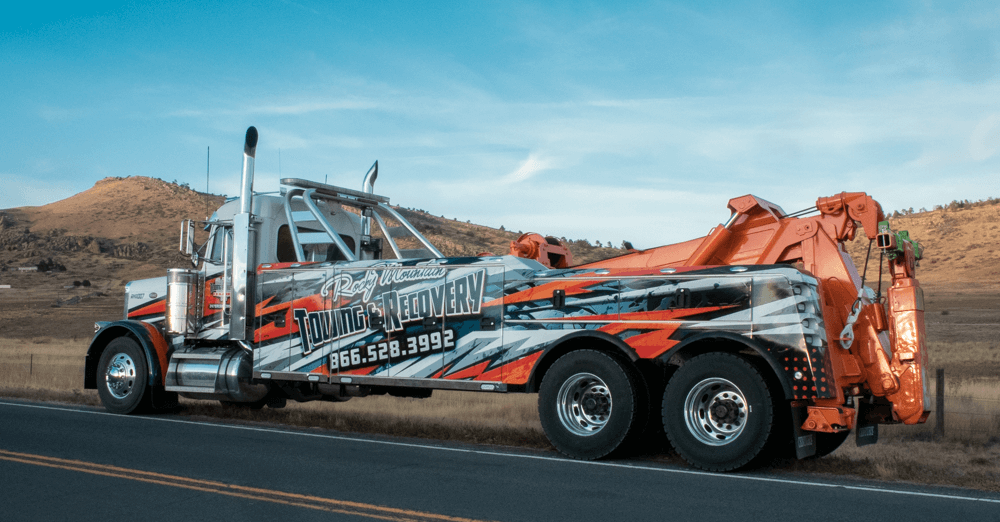
The dispiriting part after an accident is physical damage. These costs entail:
Truck repair for bodywork, frame alignment, drivetrain, or suspension These truck repair costs often exceed initial estimates once hidden structural damage is discovered. Rebuilding trailers, refrigeration units, or flatbed equipment damaged from accidents Such damaged equipment may take weeks to restore.The installation of safety systems, sensors, lights, and braking components replaced.
Modern trucks increase accident related repairs due to electronic systems.Heavy-duty vehicles towing and recovery fees, which can run into thousands Towing alone can rival a month of operating profit. In some cases, the damaged equipment can be beyond the repair limits and the vehicle can no longer be used. This forces vehicle replacement, often at unfavorable market prices. The payment of deductibles, damaged property depreciation, or even the acceptance of part of the repairs from the insurance, will all remain with the owner-operator.
Apart from the physical damage issues, the repair usually takes more than a day. Parts delays and backlog of the shop also add to the financial loss from the downtime.
Extended downtime compounds lost revenue far beyond repair invoices.
Insurance Coverage: What Pays — and What Doesn’t

Many owner-operators believe that insurance handles everything, which is a terrible error and one of the most expensive mistakes in trucking. According to the Federal Motor Carrier Safety Administration (FMCSA), comprehensive crash cost estimates for large truck accidents show that even non-injury crashes can cost tens of thousands of dollars when factors like property damage, congestion, and economic loss are included. Fatal or injury crashes can cost several hundred thousand to millions of dollars in total economic impact, including medical, property damage, and productivity losses. FMCSA
In reality, insurance gaps significantly increase total owner operator accident cost. Commercial auto insurance this is the overall structure of the coverage. It deals with third-party injuries and vehicle damages, as well as, some kinds of vehicle repairs, depending on the policy. However, deductibles and exclusions often leave portions of trucking accident expense unpaid. Primary liability insurance this is mandatory under FMCSA regulations and covers the injury of other people and damages to their property. It does not cover personal losses or truck repair cost. Physical damage insurance covers collision and comprehensive damage to the truck itself. Still, depreciation and deductibles reduce actual payouts significantly. Cargo coverage cargo space damage or loss may result in claims made by shippers. Uncovered losses can directly trigger lost contracts with customers. Bobtail insurance / non-trucking liability insurance it refers only to the situation of being unloaded with no freight on board. Improper classification during an accident can invalidate coverage entirely. Occupational accident insurance and workers’ compensation insurance owner-operators are the ones who usually escape from workers’ compensation. Occupational accident insurance may cover medical expenses, but limits vary widely. General liability insurance it deals with incidents situated outside the automobile, such as injuries at customers’ premises. These claims often arise unexpectedly and increase overall insurance exposure. Each insurance policy influences actions during an accident differently. The deficiencies between them usually put owner-operators in a position to pay out of pocket.
Insurance Coverage and Common Gaps
| Insurance Type | Covers | Common Gaps |
| Commercial auto insurance | Third-party damage, limited vehicle repair | Deductibles, exclusions |
| Primary liability insurance | Bodily injury, property damage | No coverage for own truck |
| Physical damage insurance | Collision and comprehensive damage | Depreciation losses |
| Cargo coverage | Freight loss or damage | Contract penalties |
| Bobtail / non-trucking liability insurance | Off-duty incidents | Coverage denied if misclassified |
| Occupational accident insurance | Medical expenses | Lost income not covered |
| General liability insurance | Non-driving incidents | Legal costs may exceed limits |
Insurance Premium Increases After an Accident
An accident is not only a physical repair. Insurance underwriters reassess risk based on claims history and driving records.
This often leads to:
- Increased insurance premium rates at renewal
- Higher deductibles
- Reduced coverage options
- Policy non-renewal
Even small claims can drive up driver insurance cost for years.
For owner-operators, higher premiums translate directly into reduced net income.
Downtime: The Silent Revenue Killer
Increased downtime is one of the major driver accident costs.
The minute repairs start, the money-generating process stops completely.
Downtime costs comprise:
- Lost income from missed loads
- Penalties for late or canceled deliveries
- Lease payments that continue regardless of truck status
- Fixed costs such as permits, insurance, and authority fees
Each day of downtime increases total lost income and weakens financial stability. Having a truck on the road that generates daily income is affected by the costs of extended downtime, which can run up to tens of thousands of dollars. Unlike fleets, owner-operators cannot reassign freight to backup vehicles.
What is Downtime? | For Trucker Accidents
Lost Contracts and Broker Relationships
Reliability is the greatest concern for shippers and brokers.
An accident can raise red flags, even if a driver isn’t at fault.
Consequences may include:
- Immediate lost contracts due to service disruption
- Removal from preferred carrier lists
- Higher scrutiny from brokers
- Reduced access to high-paying freight
These outcomes represent long-term lost contracts and revenue erosion.
Some contracts contain clauses allowing termination after safety incidents.
Once trust is broken, recovery may require accepting lower-paying freight.
Regulatory and FMCSA Exposure
Accidents can lead to audits, inspections, and compliance reviews tied to trucking authority and FMCSA oversight.
Possible outcomes include:
- CSA score increases
- Safety audits
- Additional documentation requirements
- Temporary suspension of authority in severe cases
Even administrative follow-ups create indirect costs and operational delays.
Medical Expenses and Personal Impact
Injuries are a cause of financial pressures on their own. Medical costs soar giantly, especially without the full support of workers’ compensation insurance. Overall, the missed time when you are not driving due to recovery is another factor for the lost income, which in turn, adds to the financial downfall. Apart from the initial hospital bills, the owner-operators usually deal with long-term and continuous secondary medical expenses. The aftermath of the accident can still be valid for the prescription medication, the aforementioned follow-up appointment(s), physical therapy, and diagnostic tests. Even in cases where occupational accident insurance pays for part of the treatment, the deductibles and limits to the coverage, as well as exclusions, leave the owner-operators to take care of substantial out-of-pocket expenses in most cases. Moreover, the remedying is mostly not correspondent with the business schedules. Every day without being at the wheel means zero revenues, while costs that are fixed like insurance premiums, truck payments, permits, and authority fees are still mounting. For many of the owner-operators, this situation becomes a kind of double strangle: the first being the physical recovery and the second, the financial burden. Also, the psychological impact is another thing that is often neglected. The anxiety of returning to driving, pain, and limited mobility impair the recovery process and also make the driver less safe on the road. In some serious cases, the long months of injury may stand in the way of the owner-operators keeping up with the industry or in fact, continuing to drive in the trucking industry.
FAQ
1. What is the cost of truck accident for an owner-operator?
Comparing the visible vehicle damage alone, you will see that a truck accident’s total cost for an owner-operator is much more than that. Apart from the costs for truck repairs, other expenses may involve insurance deductible, additional insurance premiums, truck downtimes, lost revenue, medical costs, potential accident settlements, etc. As a result of all these, the net financial losses borne by the owner-operator could in some instances be more than the yearly profit that a small-scale trucking business generates.
2. Does insurance entirely cover all the losses related to accidents for owner-operators?
Not really, insurance on its own rarely covers all losses. Although commercial auto insurance, primary liability insurance, and physical damage insurance may address specific areas, many costs remain uncovered. These include deductibles, depreciation, lost income during downtime, contract penalties, and gaps caused by misclassification under bobtail or non-trucking liability insurance.
3. What is the time frame for a downtime after an accident?
Truck downtime can range from several days to multiple weeks which is determined by certain factors like parts, damage severity, and the available shop backlog. On the other hand, this gives the revenue a terribly bad time while it stops entirely; and, the fixed costs outpourings are still relentlessly accumulating with insurance, truck payments, permits, and authority fees owing.
4. Can the accident make the driver lose the contracts even if he is not at fault?
Yes. Brokers and shippers prefer the reliability and safety record to be perfect; an accident means more questions, removal from preferred carrier lists, or termination clauses in contracts which the usual traffic can not cause, so they lose contracts and suffer from limited access to high earning freight that wasn’t their fault.
5. In what way accident settlements influence the business?
Accident settlements are one way of dealing with particular costs, while they are almost always left behind and hardly cope with long-term effects such as increased insurance costs, brand loss, or less driving ability. For the drivers, depending on settlements rather than prevention causes weaker long-term financial stability and business continuation.