

In the past ten years, the issue of safety and the technology relationship have become an inseparable duo in the trucking industry. Cameras, which watch the blind spots; automatic emergency braking, which intervenes before a collision occurs; and the lane assist systems, which gently correct the steering back on the course – these are the high-tech solutions. On paper, the deployment of these tools foretells an astonishing drop in accidents. However, the reality is that the situation is more complicated.
Modern vehicle technology promises significant progress in accident reduction, but real-world driving exposes gaps between design intent and operational reality.
For professionals in the trucking industry, safety is not a matter of theory. Risk varies with weather, tiredness, the quality of the road, driving behavior, how much cargo is in the vehicle, and human decision making. Hence, the question arises: which safety systems actually bring down risks when conditions are not favorable, are unpredictable, or are highly adverse?
Understanding collision prevention requires evaluating how driver assistance systems behave under pressure, not just in ideal testing environments.
Determining how AEB, lane assist, and cameras behave beyond strictly controlled settings is the first step toward identifying genuine risk reduction and wishful technological thinking.
The Discrepancy of Test Conditions vs Real-World Situations
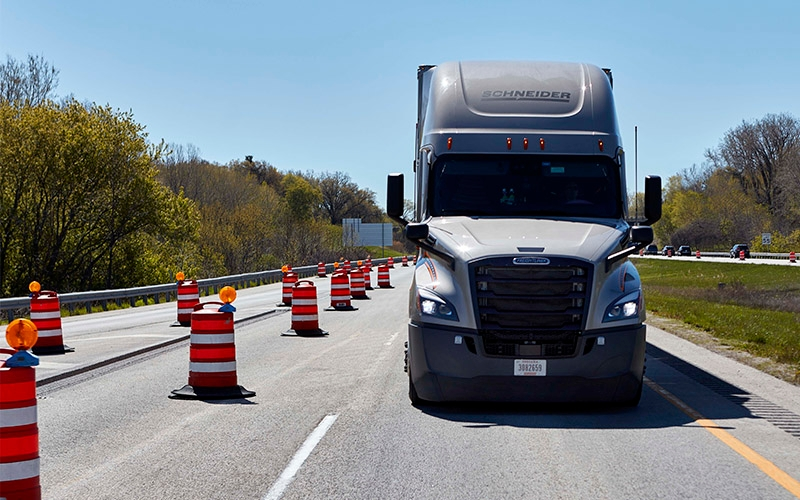
Most of the time, automotive safety systems get tested under standardized situations. A precondition of official performance ratings is having well-marked lanes, dry pavement, predictable vehicle behavior, and calibrated sensors. However, truck driving tends to be different.
Real-world accident reduction depends on how systems adapt to inconsistency rather than uniformity.
The real environment has conditions that technology must adapt to, instead of controlling:
- Faded lane markings on rural highways
- Construction zones with shifted lanes
- Heavy rain, fog, snow, or road spray
- Traffic cuts by passenger vehicles
- Long stopping distances under load
Driver assistance systems work in the midst of all these uncertainties. It is also important to emphasize that the effectiveness of these type of technologies is not only linked to how they are designed but they also depend on how the drivers learn to utilize their limits.
Test Conditions vs Real-World Trucking Conditions
| Aspect | Standard Test Environment | Real-World Trucking Environment |
| Lane markings | Clear, freshly painted | Faded, inconsistent, missing |
| Weather | Dry, controlled | Rain, fog, snow, road spray |
| Traffic behavior | Predictable | Sudden cut-ins, erratic maneuvers |
| Vehicle load | Simulated or light | Fully loaded, variable weight |
| Sensor reliability | Fully calibrated | Affected by dirt, temperature, moisture |
Cameras: Seeing But Not Judging
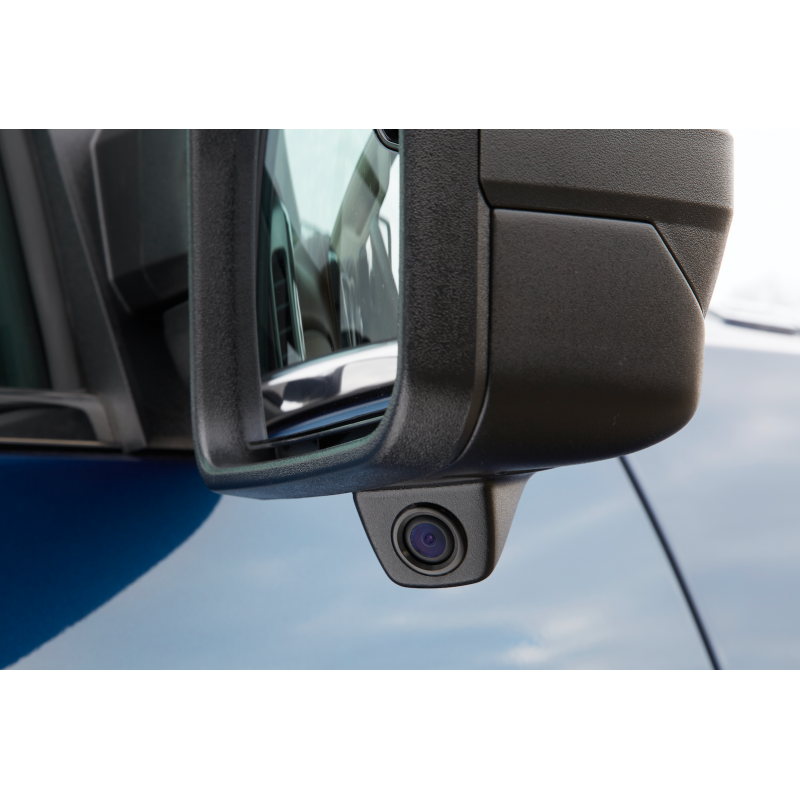
Cameras, the Overachievers
Cameras are considered the most widely accepted vehicle safety systems in commercial trucking. While forward-facing cameras, side cameras, rear cameras, and driver-monitoring cameras play different roles, they serve a single purpose: visual perception.
In real-world driving, car cameras and truck camera systems help reduce visibility-related errors rather than replace decision-making.
In real-world driving, cameras assist by:
- Enhancing blind-spot coverage
- Line-change safety cameras
- Incident recording for post-event analysis
- Assistance in low-speed maneuvers
Car cameras and truck camera systems actively do not intervene. They just inform. When employed correctly, they will improve the situational awareness, which is one of the most essential aspects of safety while driving.
The Cameras’ Flaws
Cameras cannot make decisions. They cannot determine how far to stop, assess the driver’s intent, or get used to their fatigue. In adverse weather, the camera lenses can also become dirty, wet, or covered by snow. Glare, darkness, and contrast loss can degrade image clarity.
In such conditions, vehicle technology provides awareness, not judgment.
Cameras only lower the risks in real life when drivers actively examine the information that they display. The act of passively depending upon them may lead to the wrong timing in response or, in some cases, to a non-effective preventive measure.
Automatic Emergency Braking (AEB): Actual Control in a Tense Situation
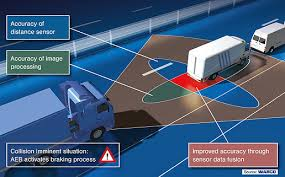
The Design Philosophy Behind AEB
Automatic emergency braking is one of the most potent provisions in active vehicle safety that you can get in the market today. By employing radar, cameras, or a combination of those, AEB is able to predict the frontal collision and automatically brake if the driver reaction is too late.
Strong AEB performance is especially critical for collision prevention in heavy commercial vehicles.
AEB gives impressive results: it prevents colliding in a lot of cases and cuts down the overall number of accidents when speeds are lower. AEB is especially notable in the trucking sector where it has resulted in fewer rear-end crashes.
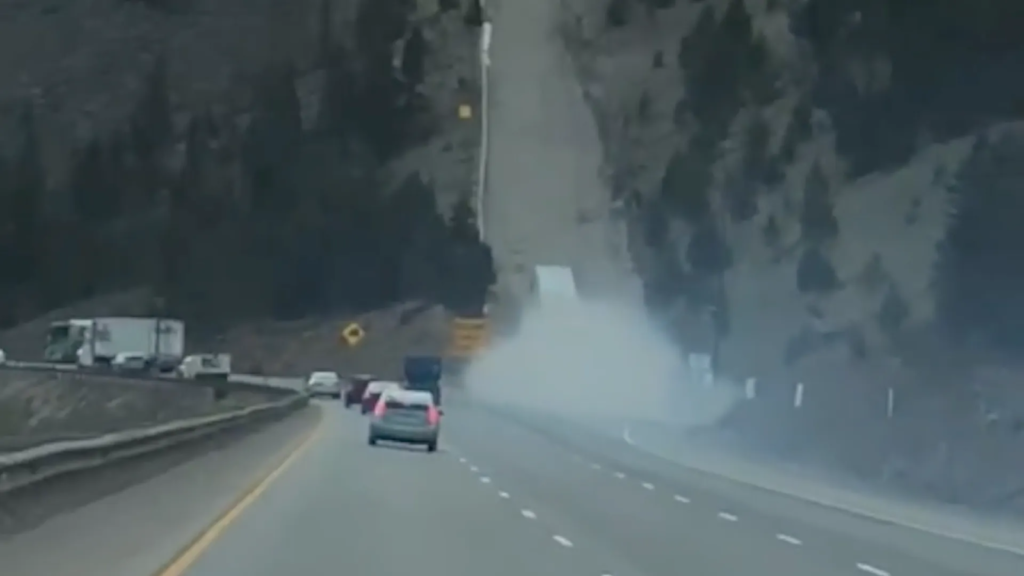
AEB Performance in Real-World Conditions
Three variables determine AEB’s successful performance in real-world conditions:
- Detecting objects accurately
- Timing of intervention
- Enough braking distance
A fully loaded truck generally has a longer stopping distance. Also, there are cuts made by passenger vehicles too close for effective full braking at times. Furthermore, sensor temperature, fog, and rain conditions can provoke distrust in sensor values. Although such realities result in less efficacy of the AEB, they do not erase its worth.
In real traffic, AEB supports accident reduction by lowering impact severity rather than eliminating risk entirely.
AEB does not substitute for driver actions. It only lessens the consequences of many accidents, not their possibility. In the trucking segment, for instance, impact speed can mean the difference between a close call and a fatality.
Practical Impact of ADAS Technologies in Real-World Trucking
| Technology | Primary Function | Main Risk Reduced | Real-World Limitation |
| Cameras | Visual awareness | Blind-spot incidents | Image degradation in bad weather |
| AEB | Automatic braking | Rear-end collisions | Limited braking distance when loaded |
| Lane Assist | Lane position control | Unintentional drifting | Ineffective with poor lane markings |
| ADAS (combined) | Layered protection | Severity of accidents | Requires constant driver engagement |
Lane Assist: The Subtle Watching & The Significant Untwist
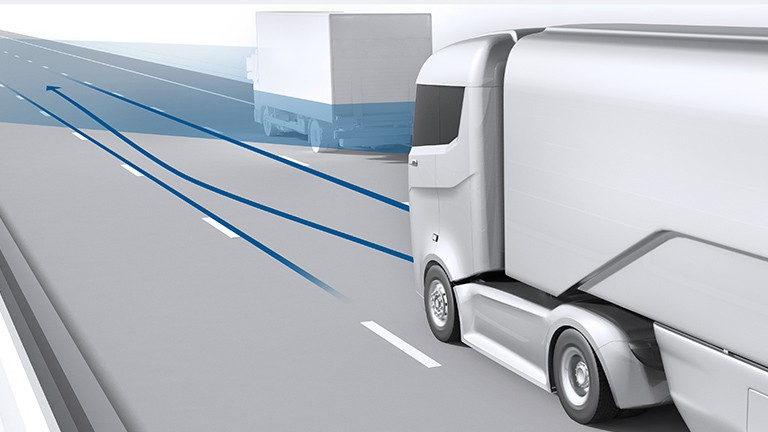
The Strength of Lane Assist Technology
The Lane Assist System aims to monitor the position of the lane and automatically steering the car back when it unexpectedly goes off the lane. Lane keeping technology is an effective tool that helps to prevent the most common kind of impacts, which are the unintentional onroad drift due to lack of attention or fatigue.
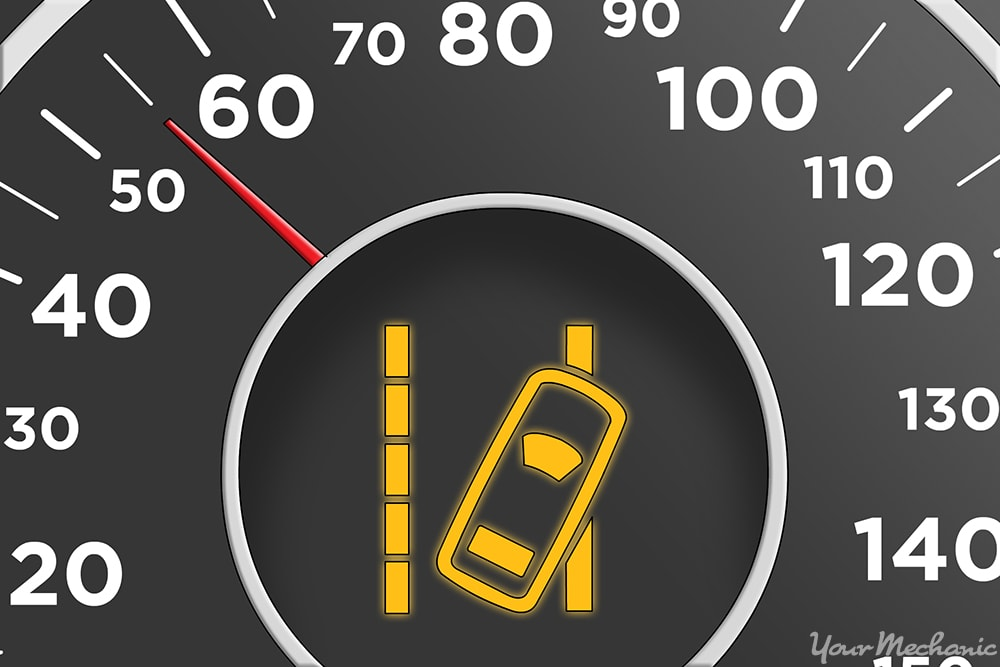
Effective lane keeping supports driving safety by correcting momentary lapses rather than sustained inattention.
Lane assist is best in the highway areas, where journeys are characterized by clear markings. For long-haul drivers, it can be a very supportive companion on their journey during long periods of driving.
Real-World Problems for Lane Assist
Lane assist operates in a peculiar way when:
- Faded or inconsistent lane markings
- Road construction is happening
- Snow or debris clouds the boundaries
- Clear striping is absent from rural highways
In these situations, lane assist effectiveness drops sharply, requiring full driver engagement.
In these cases, it could happen that the system disengages or misinterpret the road edges altogether. In real-life trucking operations, lane assist must be taken as a supportive alert, rather than a steering authority.
ADAS: Systems, Not Solutions
The Advanced Driver Assistance Systems (ADAS) encompass various technologies—cameras, radar, sensors, and software—into integrated safety solutions. ADAS is designed to through layered protection to ensure risk reduction.
ADAS contributes to collision prevention only when its components function together and drivers remain attentive.
But the effectiveness of the ADAS is cumulative, not absolute. One single system cannot make all accidents vanish. Their value lies in eliminating specific failures:
- Cameras solve visibility gaps
- AEB lessens delayed braking cases
- Lane assist eliminates unintentional drifting
In real-world conditions, they work the best when the drivers remain active and engaged instead of relying only on automation.
Active Safety and Passive Safety: The Difference
In the case of a vehicle, safety mechanisms are modelled in two aspects:
Active Safety
Active safety tries to prevent accidents:
- AEB
- Lane assist
- Collision warnings
- Driver monitoring
These systems directly influence accident reduction before impact occurs.
These systems actually mitigate risk prior to the impact.
Passive Safety
The passive safety systems are mainly concerned with protecting the people inside during a crash:
- Seatbelts
- Airbags
- Reinforced structures
Passive safety is about lessening injury severity rather than preventing accidents.
By contrast, active safety provides the most value in the field of transportation, while the passive safety approach acts as a successful last defense.
Human Behavior as a Determinant in Risk Reduction
Technology cannot completely take over human error; it can just alter it. The driver assistance systems could be:
- Reducing the time you need to respond
- Helping you during a short lapse of concentration
- Giving you alerts when you are losing attention
However, vehicle technology may also introduce overconfidence when misunderstood.
They may, however, give a false sense of security. Some drivers, who totally trust technology, tend to drive faster, tailgate more, or just forget to be vigilant.
In real-world conditions, risk is less when:
- Drivers know that there are limits to the system
- They interpret the alerts rather than ignoring them
- Technology backs up the skill, but does not replace it
When Technology Works Formedly
Safety mechanisms can showcase the most power and efficiency when:
- The roads are predictable
- Visibility is moderate
- The traffic signs of the drivers are followed
- The drivers remain attentive
ADAS systems deliver the highest accident reduction rates under stable driving conditions.
The ADAS is most effective in highway settings with continuous markings and stable traffic flows. Meanwhile, they face stress in urban chaos, rural unpredictability, and extreme weather.
Accident Reduction: The Statistical Evidence
Research shows firmly that:
- AEB significantly diminishes rear-end crashes
- Lane assist brings unintended lane departures down
- Cameras cut down low-speed maneuver accidents
This confirms the measurable lane assist effectiveness and real-world AEB performance benefits.
Still, no system can avoid accidents altogether. The combination of various means reduces risks but does not entirely remove them.
For trucking companies, the actual advantage lies in:
- Less severe accidents
- Reduced risk of catastrophic events
- Increased driver situational awareness
The Human Factor Is The Most Dominant
Despite the growth of vehicle-tech, driving safety relies heavily on human beings. Elements like fatigue, judgment, experience, and our ability to sense dangers are the main determinants on how the safety features carry out the performance.
The driver who is chic and tired may become heavily dependent on the lane-assist. A distracted driver might neglect to see collision warnings. Conversely, a top-trained driver is aware of the technology being employed, and he/she used it, and learned from it, like an extension of their senses.
Real safety is not an automatic process. It is augmented.
Selecting the Safety Devices that Are Really Crucial
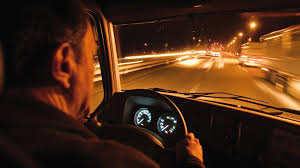
To effectively eliminate risks, truck drivers and transport companies must:
- Use reliable AEB systems specially adjusted for heavy vehicles
- Employ high-quality camera setups with redundancy
- Engage lane assist simply as an alert and not as a control system
Selecting proper vehicle technology is only effective when paired with informed usage.
Training is equivalently as important as hardware as well. Knowing what systems can do — and what they cannot do — will significantly help prevent misuse.
Final Words: Technology As a Partner, Not as a Guardian
Cameras, AEB, and lane assist are undisputedly the advanced automotive technologies that provide safety. Under real-world conditions, they only lower the risk by paired vigilant driving, realistic thinking, and rigorous habits.
Vehicle safety systems do not substitute decision-making. They support it. For truck drivers, operating in complicated environments, this distinguishing line is the most important one in determining whether the technology has actually reduced the risk or only shifted it.
Driving safety in its real essence requires the synergy of human movement and intelligent assistance. Technology gives you a wider margin of error; it is up to the driver alone how the margin will be used.