
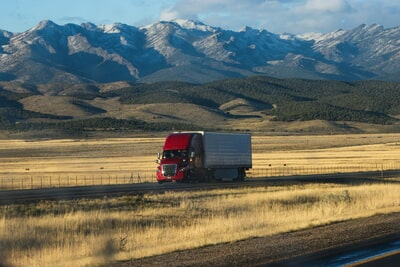
When drivers discuss road safety, their focus is almost always on highways, urban congestion, or dangerous weather. There are misconceptions about rural roads and narrow roads being easier, safe, and less tense. For truck drivers in particular, the perception is that country roads and highways are simply connecting sections to be traversed before the main road is reached. Seeing rural roads simply as highway connectors forms one of the most dangerous driving myths among truck drivers in particular.
These rarely discussed threats are responsible for a disproportionate share of serious trucking incidents.
To drive defensively on rural and secondary roads one must have a different mindset than when driving on highways. The threats are quieter, less fine, and rarely mentioned in driving schools. Yet these roads consistently produce a higher number of serious accidents, especially in the case of heavy vehicles. To understand this, we have to go beyond the speed limit and the number of vehicles per road and consider together the quality of the roads, awareness of the drivers, and control of the vehicles in low-density traffic.
Effective driver education must address these overlooked environments to reduce real-world driving risks.
Key Factors Shaping Risk on Rural and Secondary Roads
- Quality of the roads
- Awareness of the drivers
- Control of the vehicles
- Low-density traffic
- Rarely discussed threats
Why Rural and Secondary Roads Are More Dangerous Than They Appear
This Rural Road Truck Crash Was 100% Avoidable
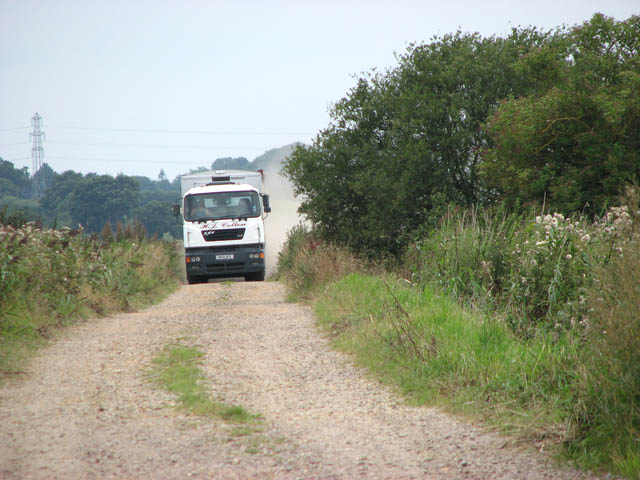
At first look, rural traffic seems to be very forgiving. There are less vehicles, wide visual horizons, and less pressure from aggressive lane changes. This calm environment gives a false sense of safety which reduces defensive driving discipline.
This illusion masks unseen road dangers that only become visible when reaction time is already compromised.
Rural roads are often the highways of yesterday: built for less traffic and lighter vehicles. They do not have the backup systems and error margins that are found on highways. Tight lanes, shoulder lanes that are limited, rough pavements, and erratic traffic signs that do not conform to norms are some of the dangers driving that combine to create situations that only become visible when a driver is too late to react to them.
For truck drivers, these conditions amplify driving risks far beyond what traffic volume alone suggests.
For truck drivers, these risks are further compounded by vehicle size, increased braking distances, and limited maneuverability. Driving defensively on country roads is not dealing with the problems quicker — it is being able to see the problems before they become a given.
Typical Infrastructure Limitations on Rural Roads
- Tight lanes
- Limited shoulders
- Rough pavements
- Erratic traffic signs
- Reduced error margins
The Problem With “Quiet Roads” Thinking

A seldom discussed threat on secondary roads is the psychological one not the physical one. A low traffic count gives a false sense of safety that unconsciously shifts the attention of the driver to the road, thus, making the driver less vigilant. They would take lesser risks while driving such as faster speeds on corners and later braking because drivers do not see any threats that are immediate.
Low stimulation environments increase exposure to unexpected hazards.
This attitude is especially disastrous on country roads that are not easy to read. A farming vehicle traveling slowly, a wild animal crossing the street, or a car that has stopped around a bend all of which no time for turning if the textbook driving techniques haven’t been already carried out.
Defensive driving on country roads commences with the conscious awareness that just because a road is quiet, it is not necessarily safe.
Road Geometry: Winding Roads and Limited Sightlines
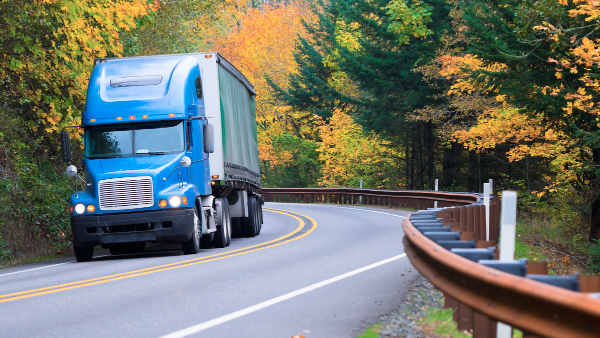
In contrast to highways, rural and secondary roads follow the continuity of the landscape, winding around it. Winding roads, elevation changes, and blind curves are some natural features of this design. These design features limit sight distance greatly, which directly affects stopping capability and collision avoidance.
Reduced visibility significantly elevates driving risks for heavy vehicles.
For trucks, entering a curve even slightly above a safe speed reduces available traction and increases rollover risk. Defensive driving means slowing down before the curve, not inside it. Many rural driving hazards emerge because drivers trust in vehicle control to correct mistakes that should not have been made in the first place.
The absence of clear visual markers elevates driver awareness over reaction speed.
How Road Geometry Increases Driving Risks
- Winding roads
- Elevation changes
- Blind curves
- Limited sight distance
- Reduced stopping capability
Road Conditions That Change Without Warning
Another seldom talked about threat is the inconsistency of road conditions on rural routes. Pavement quality can change without warning. Asphalt sectors will be replaced by unpaved roads consisting of gravel, repairs bring along uneven surfaces, and drainage issues left in the road slicks spots even during dry weather.
These abrupt changes create unseen road dangers that demand proactive speed control.
Secondary roads are also more susceptible to trash accumulation: mud and debris from farm vehicles, shiny rocks, fallen branches, discarded tires and so on. These hidden road dangers are hardly signposted and should often be expected as a result of gradient change or corner bends.
Defensive driving on country roads is like treating all unfamiliar surfaces as if they are broken and adjusting the speed as necessary.
Road Conditions vs Driving Impact
| Road condition change | Impact on driving |
| Gravel or unpaved sections | Reduced traction |
| Uneven repairs | Vehicle instability |
| Slick spots | Increased braking distance |
| Debris accumulation | Sudden obstacle risk |
Shoulders That Do Not Forgive Mistakes
On highways, shoulders act as a buffer zone. On rural roads, shoulders either are lost totally or are soft, rough, and untrustworthy. For trucks, draining the pavement can lead to a loss of control immediately.
This limitation increases driving risks when evasive action is attempted.
This situation makes it necessary for defensive driving techniques to be applied differently. There is often no safe path to evade. Lane discipline and braking are the primary tools for accident prevention because evasive maneuvers might make it worse.
Understanding this shortcoming makes it possible for secondary road drivers to reshape their risk assessment.
Rural Traffic Is Less Predictable, Not More
One of the common myths, which is that rural traffic is straightforward, is in fact a misunderstanding. In real life, it is a lot less predictable. Vehicles on country roads typically include farm vehicles, local residents, tourists, and delivery vehicles, each with its own set of expectations and rules.
This unpredictability creates constant unexpected hazards for truck drivers.
Our rural routes are dotted with languidly executed turns without signals, snap stops near driveways, and vehicles entering the road from basically nowhere unmarked places. They’re wrong. Lack of understanding together with the multitude of road users who behave erratically is what makes driving threats acute for heavy vehicles.
Defensive driving depends on the assumption that other road users might act unexpectedly and therefore a driver should leave space and time for such actions.
Rural Traffic Characteristics and Risks
| Traffic characteristic | Resulting risk |
| Slow-moving farm vehicles | Rear-end collisions |
| Unsignaled turns | Sudden braking |
| Unmarked access points | Unexpected vehicle entry |
| Mixed driver behavior | Unpredictable traffic flow |
Speed Limits That Do Not Reflect Safe Speed
Rural and secondary roads are often posted for ideal conditions for passenger cars. They rarely take into account the weight of the truck, load shifts, or braking distance. Driving at the posted limit can still be dangerous driving for a loaded truck.
Posted speed limits do not guarantee safe operating conditions for heavy vehicles.
Defensive driving requires setting the speed according to visibility, road geometry, and surface condition — and not relying only on signs. This rule is the basis of vehicle control on back roads, where the dangers multiply quickly.
The frequently recommended but often neglected technique is driving at lower speeds in rural areas.
Animals and Agricultural Equipment: Unique Rural Hazards
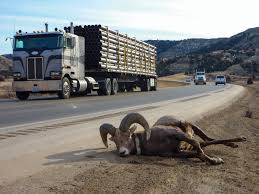
Wildlife crossings are a well-known rural driving hazard, but their impact on trucks is often underestimated. Sudden braking or swerving to avoid animals can destabilize a heavy vehicle, leading to jackknifing or rollover.
These situations represent some of the most unexpected hazards in rural driving.
Agricultural equipment presents a different threat. Tractors, harvesters, and trailers may move slowly, lack proper lighting, or extend into the roadway. On winding roads, these obstacles appear with little warning.
Defensive driving is about prioritizing a controlled deceleration instead of a last moment avoidance, especially where the margins of vehicle control are small.
Common Rural Hazards and Defensive Response
| Hazard type | Defensive response |
| Wildlife crossings | Controlled deceleration |
| Slow farm equipment | Increased following distance |
| Unlit machinery | Reduced speed |
| Sudden obstacles | Lane discipline |
The Absence of Immediate Help
Secondary roads are often deserted and far from the emergency services. Accidents on these roads yield longer response times, and serious accidents often follow. This makes the accident prevention priority higher.
This reality is rarely emphasized in driver education programs.
For truck drivers, defensive driving not only involves accident avoidance but also minimizes the situations when they break down or have to find a safe way far from the road.
Driver training often overlooks this point, but it strongly influences the risk assessment on back roads.
Fatigue and Monotony on Secondary Routes
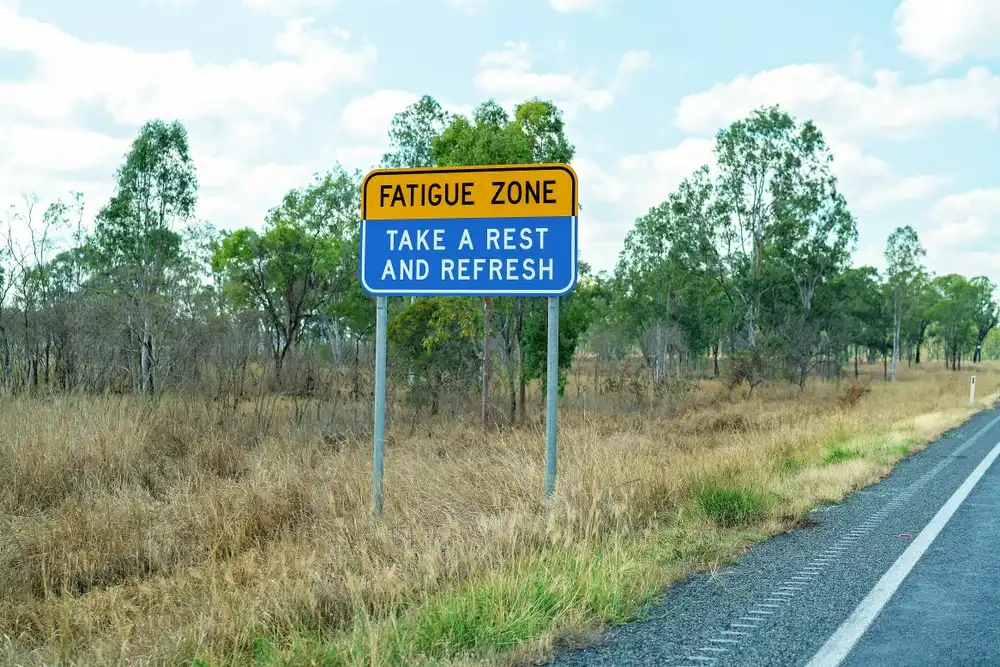
Driving in a rural area may be thought of as relaxing but can be deceptively draining. Extended periods of driving with no decision making reduce alertness and grow reaction times. This effect is subtle and invisible with a sudden risk appearing out of the blue.
Fatigue amplifies existing driving risks even in low-traffic conditions.
These techniques are very flexible and may include frequent mental scanning, active mirror checks, and conscious posture adjustments to keep a driver aware of their surroundings.
Managing fatigue is a vital part of accident prevention in low-stimulation environments.
Defensive Driving Techniques That Matter Most on Rural Roads
There are certain defensive driving techniques that apply especially well outside the highways, such as:
• Reducing speed before curves and elevation changes
• Maintaining extended following distance
• Scanning beyond the immediate roadway for movement or changes
• Avoiding assumptions about other drivers’ behavior
• Prioritizing stability over evasive maneuvers
These safe driving tips address risks that are rarely discussed in standard training.
All of these techniques touch on those rarely-discussed threats that the standard driver instruction misses.
FAQ
1. Why is vehicle control more important than reaction speed on secondary roads?
Secondary roads leave very little room for error. Defensive driving focuses on avoiding situations where rapid reactions are required in the first place. This approach lowers exposure to unexpected hazards instead of relying on late responses when options are already limited.
2. How does smooth vehicle control reduce risk for truck drivers?
Maintaining relaxed steering, gentle braking, and making decisions in advance helps preserve vehicle stability. Abrupt inputs increase risk, especially for trucks that are top-heavy or carrying shifting cargo. Controlled driving supports collision avoidance by preventing situations that require emergency correction.
3. Why do many driver education programs fail to prepare drivers for rural roads?
Most training programs focus on highways because they are easier to measure and regulate. As a result, many drivers learn defensive driving principles without understanding how they apply to back roads and country roads. This gap in practical knowledge contributes to higher accident risk in real-world, low-control environments.
4. Why do rural roads feel safer than they actually are?
On highways, threats are visible and constant, which keeps drivers alert. On rural roads, dangers are hidden and develop gradually. This contrast is misleading and causes drivers to underestimate risk, even though unseen road dangers define rural safety profiles.
6. What makes quiet roads especially dangerous over time?
Low traffic, familiar routes, and calm surroundings slowly erode defensive driving habits. The most serious hazards on rural and secondary roads are not dramatic—they accumulate quietly and go unnoticed until a critical situation occurs.
7. What mindset helps truck drivers stay safe on rural and secondary roads?
Accident prevention on country roads requires rejecting false comfort and applying defensive techniques consistently. Awareness, restraint, and anticipation are essential. Rural roads do not forgive assumptions, and only drivers who respect hidden risks maintain control when conditions become unforgiving.
For truck drivers, accident prevention on country roads is absolutely a personal thing. It is to throw away the false comfort of being in a well-known road and apply the defensive techniques at all times. Awareness, restraint, and prediction are the most useful things to be safe.
Rural roads do not forgive assumptions. Only those drivers who respect their hidden risks will be able to drive carefully when the situation becomes tough.