
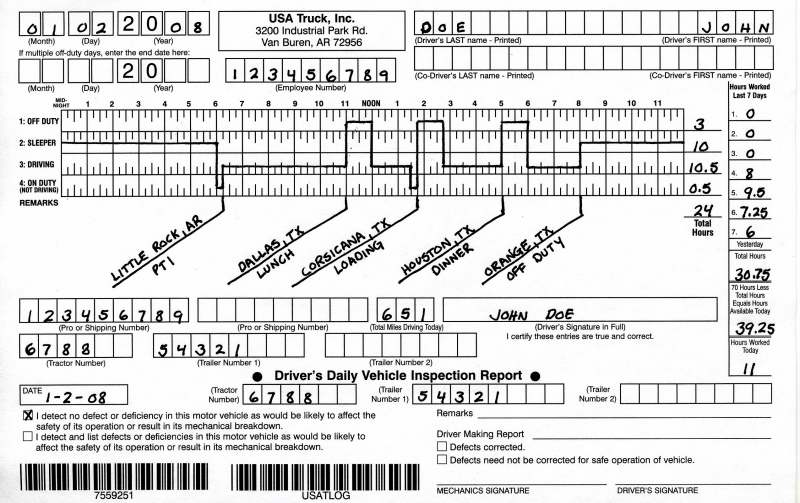
The majority of truck drivers are conscious about safety while driving on the highways. Mirrors, speed, following distance, meteorological conditions, tiredness, and all others are continuously kept in check while driving. However, when the trip comes to an end, safety usually is nowhere to be found. The logbook is updated, the paperwork is filed, and the next run is ready to be started.
That void is where many of the risks that drivers endure more than once reside.
A personal safety audit doesn’t stand out as a company policy, compliance form, or disciplinary paper. Instead, it is simply a way that a driver has the control to record risks, capture lessons, and change the trips to measurable safety improvements. A personal safety audit used consistently, the templates, aid drivers realize why certain trips appear more difficult, where risks reoccur, and how minor changes could aid in stress and incident reduction.
This article illustrates how truck drivers are able to use personal safety audit templates for recording risks, tracking improvements for trips, and building a personal safety plan that is developed under real driving conditions.
What a Personal Safety Audit Really Is
A personal safety audit is a brief and structured review of a journey just completed. It highlights three questions of key importance:
- What risks did I run into?
- How did I tackle them?
- What can I do better the next time?
And that is about it.
Personal safety audits, unlike conventional safety audits, are not aimed at confirming compliance. Personal safety audits, instead, are concerned with an individual’s personal risk management. They center on real decisions made under pressure, weariness, inclement weather, variable traffic, and a time constraint.
An added feature in a personal safety audit template indeed is a separate platform for observations, that is organizing these observations rather than losing them in time and letting them fade from memory.
The Gain of Safety Audits for Truck Drivers
Many driving risks happen without actually injuring anybody. They usually appear as:
- tension over some repetitive routes
- many missed close-call situations never documented
- Fatigue development on known routes
- Braking just a little bit too late or sudden lane change.
Since nothing “happened,” these risks are not dealt with. Gradually, these risks become the new normal.
And then they become dangerous.
The recording of risks makes the patterns visible to the driver. When patterns are evident, then they can be treated ahead of time through preventing incidents.
Personal Safety Audit Templates: Risk Recording Overview
| Trip Element | Example Entry | Purpose |
| Route context | Highway / secondary roads / urban | Adds environmental context |
| Risk recording | Fatigue before last stop | Captures real travel risks |
| Response taken | Slowed down, stopped early | Links action to outcome |
| Travel improvements | Earlier rest planning | Supports trip safety improvements |
| Risk log for trips | Repeated fatigue on same segment | Reveals recurring patterns |
Personal Safety vs Company Safety
Company safety systems check for:
- Breaches
- Inspections
- Incidents
On the other hand, personal safety focuses on:
- Decision-making
- Stress level
- Alertness
- Early warning signals
A driver could be confirmed as compliant fully and still, he might go on with the feeling of being unsafe trip after trip. Therefore, personal safety audits are designed to fill that loop.
They serve as a way for drivers to manage safety before it is reported as a problem.
What a Personal Safety Audit Template Contains
A safety audit template that is good enough is:
concise (so as to finish it within minutes)
structured ( so as to create consistency).
Common safety audit forms are too complicated and mainly drivers discontinue using them.
The most effective templates have the following sections. Each template for safety audit should be short enough to finish quickly, but consistent enough to compare one trip to the next.
Trip Overview: Setting the Context
Every trip safety audit should start with basic context. This is memory support, and it is not paperwork.
The useful context is:
- route type (highway, secondary roads, urban)
- time of day
- weather conditions
- load characteristics
This info helps to set risks in a particular environment rather than seeing them as random incidents. A simple travel safety template (or safety template for travel) makes that context easy to capture in the same format every time.
Risk Recording: Capturing What Actually Happened

Risk recording literal meaning is the core of the audit. The point of recording travel risks is not to write a story, but to capture repeatable patterns before they become routine.
It is important to highlight that the issue is not with the dangerous events but with those times reality seemed to differ from expectations.
Examples of risks that should be noted:
- moments of lower than normal attention
- blocked vision
- hasty decisions
- unexpected car behaviors
- Signs of fatigue
On a few short lines, that’s all it takes. These notes in the future will function as a travel risk log that shows the journey’s path better than a single trip can.
Includin the Response, Not Just the Risk Recorded
Every risk recorded should consist of one simple follow-up.
What did I do?
Did you slow down? Stop early? Push through? Reroute? Ask dispatch? Ignore it?
This stage of the audit alters its role from being just an account of risks to a learning tool. This also allows to look if the response really affected the risk level or just it was temporarily delayed.
Improvements for Trips: The Central Part
Most drivers write down problems but stop there. This is right at their hand.
Improvements for trips should be practical and under the driver’s control. They are not promises, but rather, they are changes.
Examples:
- Slow down much earlier approaching a known downhill
- Plan fuel stops earlier on longer routes that drag ones fatigue down
- Avoid a specific delivery window
- Change departure time
Flagging improvements in safety changes experiences to achievements instead of mere repetitions.
From Risk Recording to Trip Safety Plan
| Recorded Risk | Immediate Action | Planned Travel Improvements |
| Fatigue on night route | Short rest stop | Adjust departure time |
| Late braking zone | Reduced speed | Earlier speed reduction |
| Urban congestion stress | Rerouted | Time window change |
| Repeated dock issues | Asked for guidance | Different delivery slot |
Conducting Travel Risk Assessment the Simple Way
Travel risk assessment does not have to have rating systems or formal analysis.
At the driver level, it means asking:
What made this trip harder than I thought?
What if the next one is going to be?
That question alone can cover fatigue, weather, traffic, planning, and decision-making.
Safety Checklists vs Safety Audits
These two terms are often mixed up.
A travel safety checklist is preventive. It has to be used prior to departure:
- vehicle condition
- load security
- weather check
A personal safety checklist helps prevent predictable issues before the wheels roll.
A trip safety audit is reflective. It has to be used after completion:
- what risks appeared
- what decisions mattered
- what should change
The two together can create a complete safety loop.
Building Up a Personal Safety Plan Gradually
One audit has little weight. Ten audits betray a trend.
By analyzing personal safety audit templates, truck drivers are able to spot:
Most of the time tired points
Critical time slots that are prone to accidents
Problematic areas
Stressful deliveries
This information simply creates a trip safety plan where the changes occur as conditions change. The training is not generic but instead, it is designed based on the actual driving experiences.
Using a Travel Risk Log to Lessen Mental Load
Risk registration has one secret advantage: it provides mental clarity.
Untracked risks take the back seat. They can create problems with concentration and cause stress. When these thoughts are externalized then the problem is written down.
A travel risk log that only lists:
- frees mental space
- lessens emotional carryover
- Improves concentration on future trips
Brain power is released when cognitive load decreases, and safety improves.
Adapting to Templates in Different Situations
The level of risk differs among trips.
A night long-haul trip and a short urban delivery should not be audited the same way. The good safety templates are flexible.
Drivers may emphasize:
Fatigue and weather on long trips
Traffic interaction and dock security on a short run. The structure remains the same; the focus simply changes.
Paper vs Digital Safety Audit Forms
There is no standard best format.
Paper templates:
- fast
- easy
- not distracted
Digital templates:
- searchable
- easy to analyze
- long-term trend tracking
The right audit form is the one which works for you and which you utilize on a consistent basis.
Maintaining the Safety Audits
The greatest risk to any safety system is neglect.
Personal safety audits should:
- take less than five minutes
- be relevant
- be simple
Consistency trumps detail, the brief sum-up after every trip is more valuable than in-depth audit done once a month.
The Effect of Personal Audits on Professional Confidence
The drivers who record their safety habits:
- communicate better with dispatch
- see the sign of fatigue earlier
- argue against unsafe schedules with real facts
- make proactive decisions rather than just react
Personal safety audits build confidence through proof, not showiness.
Final Words: Drivers Own the Safety

Nothing can replace experience to improve the safety but it takes time to reflect.
By means of personal safety audit templates drivers can record risks, document improvements on trips and, make driving a learning process through turning it into a structured one.
They are not about blaming others.
They are not about compliance.
They are about gaining control.
A personal safety audit is merely the awareness of professionalism in writing, and that is the awareness that keeps our trips safe way in advance.
FAQ
1. What is the necessity of personal safety audits for truck drivers to do right after the trip?
The primary reason is that most risks appear to be minor or non-serious when they are occurring. The help of a personal safety audit finds the things that drivers have seen as small warning signs — fatigue, hurried decisions, and uncomfortable situations that they had to face beforehand — , lose sight of it, and finally turn them into repeating problems or incidents.
2. Is it the personal safety audit by regulations?
A personal safety audit is not a regulatory requirement. It is a self-managed tool designed to improve individual awareness and decision-making, especially in real-world driving conditions that formal rules do not always address.
3. What is it that makes the safety audit more useful than memory?
Memory is fragile and tends to fade, especially after long or stressful trips. Documenting risks and outcomes allows drivers to see situations clearly.
Instead of relying on memory or guesswork, they can identify patterns that may have gone unnoticed over time.
4. What is the focus of a driver while completing a safety audit?
The emphasis is on the moments when the driver had to exert more effort in a given task than he or she initially expected such as working in poor visibility, time pressure, fatigue buildup, or encountering misbehaving traffic. These are precisely the time windows which can be targeted to make the most improvements.
5. Can personal safety audits be of any help for short trips?
Sure. Most short runs and popular routes tend to make drivers overconfident. Audits can help them to see routine risks that they have learned to ignore, especially on repeated deliveries or local runs.
6. How does a personal safety audit affect the next trip?
Each audit will be the guiding light of experience. Thereby, by looking back at risks and the measures taken, drivers will get a better strategy to implement early on during their journey, thus, they will feel less pressure and be able to avoid hasty decisions.
7. Is there a “correct” form for a personal safety audit?
There is no universally correct form. Some drivers prefer a notebook, some use digital templates. The most efficient audit is the one that gets incorporated naturally in drivers’ daily work and is regularly filled in.
8. What will happen if a driver skips a couple of audits?
Nothing will happen immediately but the patterns will remain undiscovered. Without reflection, the safety measures that the driver has to control the same ones over and over throughout repeat will come back to him/her. Regularly practicing personal safety audits is the best option, as they should turn into a habit rather than a response to situations.