
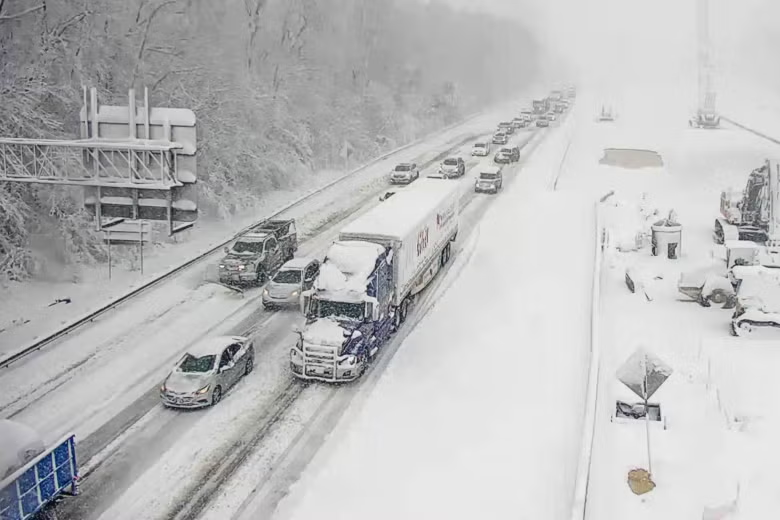
To an owner-operator, winter is just a season. It is a real test of will.
For many professionals, the owner operator winter season becomes the point where experience meets discipline.
Ultimately, every winter run brings about the same internal conflict: Do I need to keep moving, or should I put it down? Just like company drivers, owner-operators deal with a choice that has fully grown consequences lurking behind. It is not like a safety department to rely on, no one dispatcher to be the protagonist in this dilemma. Each mile driven or bypassed is a direct influence on finances, equipment, security, and even the ability to continue the road during the winter months.
For any truck driver operating independently, this choice defines the balance between safety and income.
The decision to “drive or park” is not based on whether you are brave or tough enough. It is primarily a business decision, which is then analyzed through a risk assessment lens. Winter brings to the forefront the flaws in this judgment.
Understanding the drive or park decision as a structured process, rather than a reaction, is one of the most important owner-operator lessons.
This article provides a step-by-step decision procedure for owner-operators to be able to deal with the problem of making dangerous decisions in the winter by evaluating risks, freight opportunities, and basic operating conditions before they decide on the miles or parking.
More trucking checklists and real-world decision frameworks are available at https://intermodalinsider.com/.
How Winter Changes the Rules for Owner-Operators
When it is warm, most of the driving decisions go to the side of the driving. The roads are clear, there are many freight loads, and the threat is under control. Winter, however, adjusts the exposure.
This is where winter trucking becomes less about movement and more about judgment.
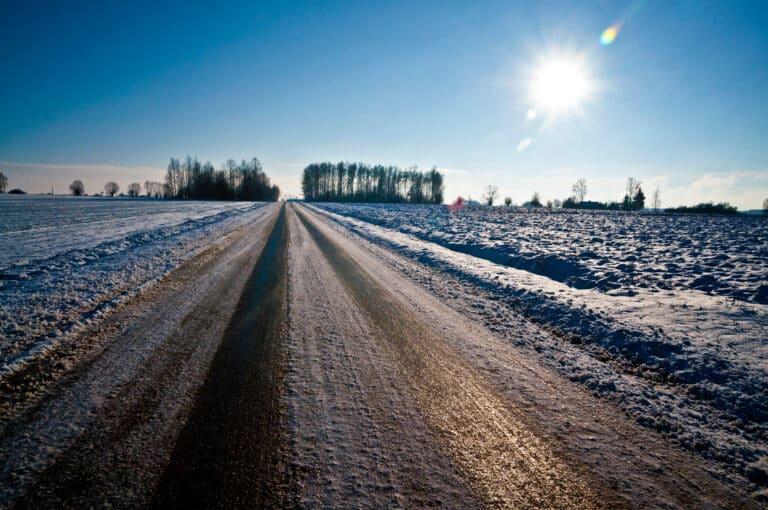
The cold weather presents changes that cannot be controlled. Ice occurs very fast contrary to forecasts, while the mountain pack leads to bad driving conditions; for a truck, mechanical stress causes more damage in low temperatures. Even flat roads can lose traction without warning.
These conditions demand a different mindset and practical winter driving tips that go beyond standard habits.
Winter Roads & Holiday Loads: Top Safety Tips for Fleets
A choice to drive in winter for an owner-operator is not always simply whether the road is temporarily passable or not; it must consider what will happen if the conditions turn ugly.
The Main Question: Revenue vs Risk
Numerous slip-ups during winter are a result of misplacing the priorities.
Many owner operator tips focus on maximizing miles, but winter requires balancing miles with survivability.
So the query is not:
“Can I get through?”
Rather it should be:
“What are the outcomes if I fail?”
Authoritative winter driving safety guidance from the Federal Motor Carrier Safety Administration recommends that commercial drivers adjust speed appropriately for hazardous conditions and discontinue operations when conditions become too dangerous to maintain safe control, reinforcing the idea that choosing to park when conditions are unsafe is a valid safety strategy. FMCSA
Consequences of exposure comprise:
- machinery breakdown
- trip extension
- missed revenue in the future
An incident in one winter settlement is capable of cutting down progress by weeks; hence, in some cases parking is the sole profitable option.
In winter, choosing to park is often the smartest business decision, not a missed opportunity.
Revenue vs Risk Evaluation in Winter
| Factor | Driving Through | Parking |
| Short-term revenue | Possible | Delayed |
| Equipment exposure | High | Low |
| Downtime risk | Elevated | Minimal |
| Long-term income stability | Uncertain | Preserved |
| Decision control | Reduced | Maintained |
Step One: Environment Hazard Assessment
Before calculating your payment or the distance, it is good to take an environmental reading.
This first step sets the foundation for the entire decision procedure.
The quality of the road is much more significant than its distance. A shorter run that goes through tighter and rocky terrain might be more hazardous than a longer one over a straight and smooth road.
This difference becomes critical during mountain pass driving, where conditions change rapidly.
The biggest contributor to winter hazards is driving elevation changes, the appearance of shaded areas that refreeze, and the addition of exposed bridges. If there are flat routes that vary little in temperature, they will be controllable despite snow.
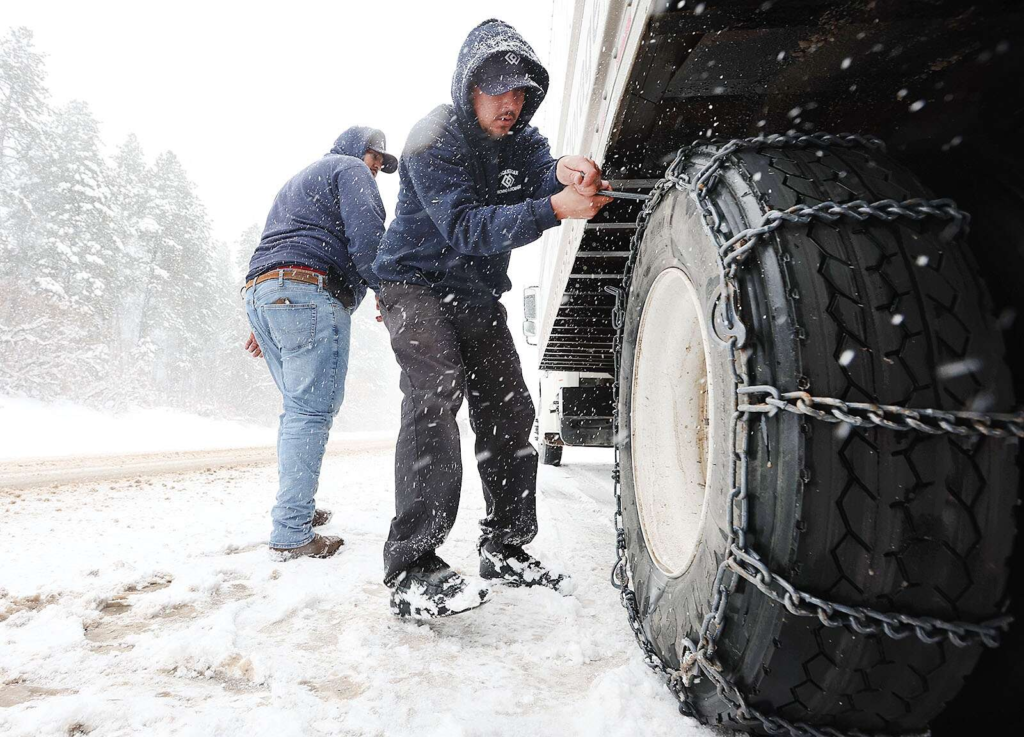
Ice is the number one hazard. Snow blocks traffic, but ice means total loss of control. With the use of chains, the effect of snow on the traffic will diminish, but they will not remove this risk completely. The presence of this kind of equipment should bring out caution, not confidence.
Environmental Risk Factors by Road Type
| Road Type | Key Winter Risks | Shutdown Options |
| Flat highways | Ice, refreeze, wind | High |
| Secondary roads | Shading, poor maintenance | Medium |
| Mountain passes | Elevation change, closures | Low |
Step Two: Check Whether the Equipment is Ready
Driving in winter is a good way to expose faults quickly.
For an owner operator winter season, equipment readiness becomes non-negotiable.
An honest equipment analysis involves checking tires, brakes, and reliability in bad weather. Machines, which seem to perform “good enough” at optimum were known to fail under stress conditions in winter.
Owner-operators need to be forthright in their dealings. Equipment that is not well maintained will convert small mistakes into big problems when winter arrives.
Step Three: Freight Quality Evaluation
Not all freight is worth risking the winter.
This is where operational discipline separates experienced operators from reactive ones.
Winter freight volume is not stable and increased rates mean nothing if they are not the right choice for you. A load is truly worthy only when it permits flexibility when the situation worsens.
Cargo that binds the truck to move regardless of the weather turns into a liability instead of an opportunity.
Smart owner operator tips always include evaluating freight quality, not just rate numbers.
Freight Suitability for Winter Driving
| Freight Characteristic | Safer in Winter | Risky in Winter |
| Flexible delivery window | Yes | No |
| Weather tolerance | High | Low |
| Penalties for delay | Low | High |
| Ability to park with load | Yes | No |
Step Four: Time Pressure and Dispatch Influence
Dispatch pressure goes high in winter.
This pressure often pushes owner-operators toward poor drive or park decisions.
Owner-operators are required to make a clear separation between external urgency and the reality of their operation. Road physics do not change due to deadlines and broker expectations.
Driving decisions based on emotional pressure that arise from winter are, in the long run, the most ignored costs. Although early parking seems expensive, it is far worse to recover from an accident.
Step Five: Personal Condition and Fatigue
Cold weather increases fatigue before driving even starts.
This factor is often underestimated by even experienced truck drivers.
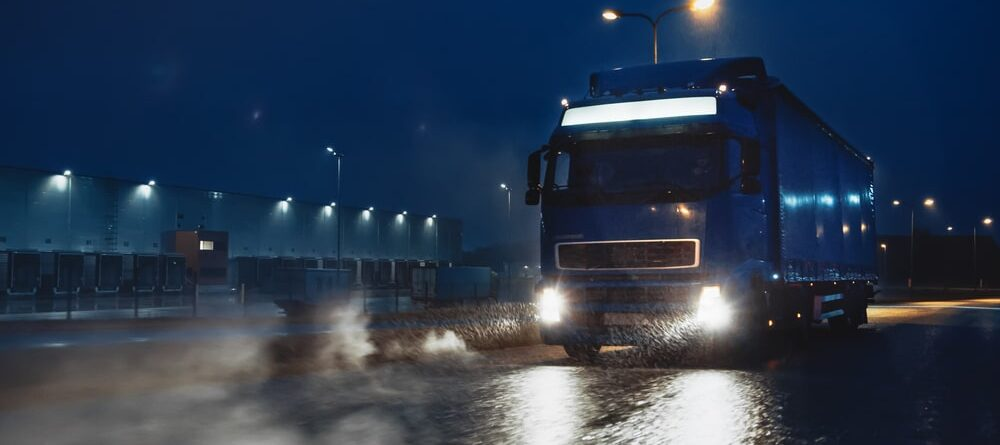
Winter trucking is a strenuous task that requires:
- a higher level of mental activity
- constant traction evaluation
When fatigue interacts with winter conditions, the risk goes up, it does not just add to it.
So if staying alert is already a problem, then parking is not a sign of weakness, but it is a sign of keeping control professionally.
Snow Chains: Tool, Not Solution
In the context of the drive-or-park situation, snow chains are a very special attention-drawing item.
They should be treated as support tools within the overall decision procedure, not as permission to proceed.
Snow-chain installation improves traction but does not decrease ice risk and stopping distance. Using chains means also slow travel, high tension, and mechanical strain.
If chains add to the required distance, then the question is shifted from can I drive to should I be driving.
Mountain Pass Driving vs Flat Roads
Mountain pathways are more prone to winter dangers.
Mountain pass driving requires a separate mental and operational approach.
Variations in temperature, wind exposure, and traffic bottlenecks create rapid-changing conditions. A mountain route, which is currently open, might close at the moment when you are not expecting it.
Flat roads allow a shutdown in a controlled manner. Mountain routes most of the time do not. An owner-operator has to view mountain driving as a separate risk.
Parking as a Strategic Move
Parking is not a loss of revenue; it is merely a set risk that is to be dealt with later.
In winter trucking, parking is often part of a long-term business decision.
Strategic parking is preserving the equipment, protecting the driver from health risks and preventing the delays that follow the mentioned issues.
Owner-operators who respect parking as a part of their decision process outperform those who are chasing every mile in the cold.
The fundamental thing is planned parking instead of reactive stopovers due to encountering safety risks.
The Company-Wide Level
Winter picks up interest.
The truck that was safely parked today will move on tomorrow. The one that was damaged in winter will bring about down time, stress insurance, and impulsive decisions.
Owner-operators who navigate the winter effectively do not see safety as a hindrance but rather as an avenue to increased revenue.
A Simple Winter Drive-or-Park Checklist
The vast majority of the prosperous owner-operators use their minds to go through the same routine:
This internal check supports a consistent drive or park decision.
- Are the conditions NOT only passable but also stable?
- Is the load good enough to stand the weather?
- If needed, can I shut down safely?
Where uncertainty prevails, the usual response is parking.
Final Thoughts: Discipline Beats Bravery
Winter trucking is not about being aggressive, but it is about being disciplined.
The “drive or park” decision protocol is not about the total eradication of risk from your life but about making a conscious decision about which risks are fine for both your business and your health.
The smartest driving choice in a cold season is, many times, the one you decide to skip.
FAQ
1. Is the decision to “drive or park” mainly a safety or a business decision for owner-operators?
For owner-operators, the choice of driving or parking is fundamentally a business decision, which is first reviewed through the impact it has on safety. Winter weather affects the vehicles, delivery schedules, and consequently, the long-term earnings, which turn parking into a strategic option and not just a loss of productivity.
2. How should the owner-operator analyze the risks of driving in winter before launching a trip?
Road risk assessment should take into consideration types of roads, altitude changes, weather conditions, temperature changes, and shutdown processes. The central issue relates to the stability of the road for driving, and this is not only about the current situation but a question of whether there will be any further deterioration in conditions.
3. Are snow chains enough to ensure that winter driving is safe again?
Snow chains enhance the grip on the road but they are no guarantee against ice hazards, longer stopping distances, or added wear on brakes. They should be worn with a sense of caution and a slow speed, not seen as an automatic ticket to proceed under unsafe weather conditions.
4. What makes mountain pass driving more dangerous than flat roads during winter?
Mountain passes, having all the elements like sudden weather changes, windy spots, diversions, and fewer exit routes, are like a roller coaster. In contrast to flat roads, they often do not wear the formal use of safety flashing or other signs, making it important to prioritize the decision on parking at an early stage of the winter.
5. When is the most advantageous time to park in the winter?
The best option is to park in cases when the weather is erratic, tiredness is real, the cargo does not allow adjustments, or the choice of shutdowns is very limited. Targeted parking helps in preventing equipment damage, ensuring the continuation of earnings, and also minimizing the chance of being unable to work over a long period.