
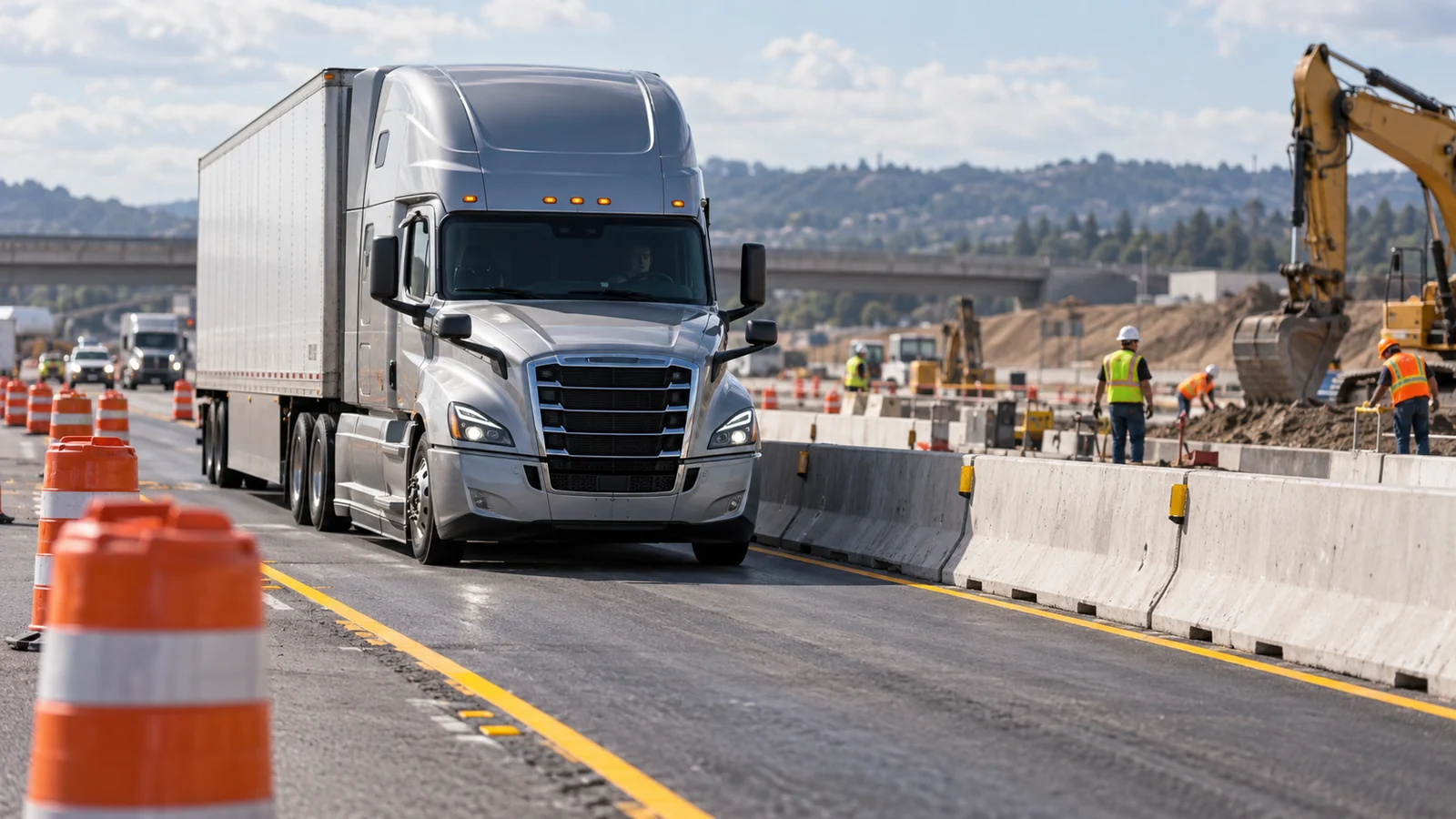
Highway work zones compress traffic, change familiar lane patterns, and place drivers close to workers, barriers, and heavy equipment. For a tractor-trailer, the risks increase because the vehicle needs more room to stop, has large blind spots, and may have only inches of extra clearance in a narrow temporary lane.
A safe trip through construction begins before the first orange sign appears. Drivers need to research the route, expect sudden queues, reduce speed early, and keep enough space to respond smoothly. The goal is not simply to pass through the zone quickly. It is to leave enough time and room for safe decisions when traffic behaves unpredictably.
Research the Route Before Departure
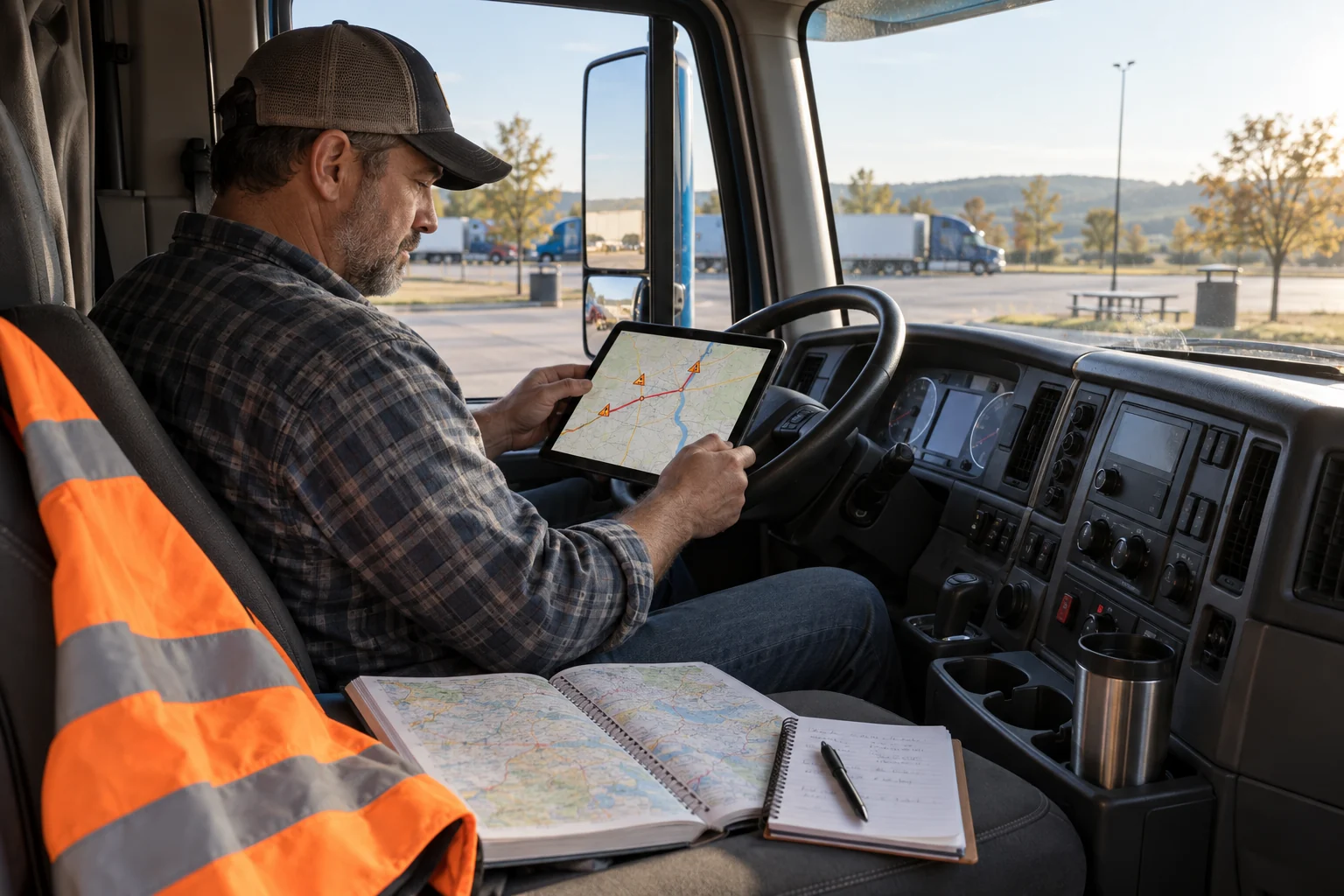
Check state transportation alerts, carrier messages, weather, and truck-safe navigation before starting the trip. Look for lane closures, width restrictions, temporary detours, overnight construction, reduced bridge clearance, and prohibited truck routes. A passenger-car detour may not be suitable for a commercial vehicle.
When a practical truck route avoids a major work zone, compare the extra distance with the expected delay and risk. Set the route while parked. If conditions change during the trip, pull over at a safe location before reviewing maps or entering a new destination.
Read the Work Zone From the First Warning Sign
The advance warning area gives drivers time to understand what is coming. Watch for reduced speeds, lane closures, flaggers, shoulder work, construction vehicles, and shifting traffic patterns. Temporary markings may differ from the permanent lines a driver remembers from earlier trips.
Scan far ahead and confirm the open lane early. Check mirrors for vehicles alongside the trailer and avoid a last-second move. FMCSA recommends moving into the open lane as soon as possible when approaching a closure while paying close attention to traffic in blind spots.
Reduce Speed Before Traffic Compresses
A posted work-zone limit is a maximum under favorable conditions, not a guarantee that the speed is safe for every truck. Narrow lanes, curves, rough pavement, rain, workers, or stopped traffic may require a lower speed. Ease off early and brake smoothly so following drivers have time to react.
Avoid entering the taper at highway speed and then braking hard. Sudden deceleration can destabilize the load and surprise traffic behind the trailer. Keep the truck in a gear that supports controlled movement without unnecessary acceleration and braking.
Create Extra Following Distance
Rear-end crashes are common in work zones because traffic can stop with little warning. Leave more space than you would on an open highway. Increase it further in rain, darkness, heavy traffic, on grades, or when the pavement is uneven.
Protect the space instead of treating it as unused road. Passenger vehicles may enter it, so rebuild the gap gradually. A generous cushion reduces the need for aggressive braking and gives the driver more time to see brake lights beyond the vehicle immediately ahead.
Hold a Stable Position in Narrow Lanes
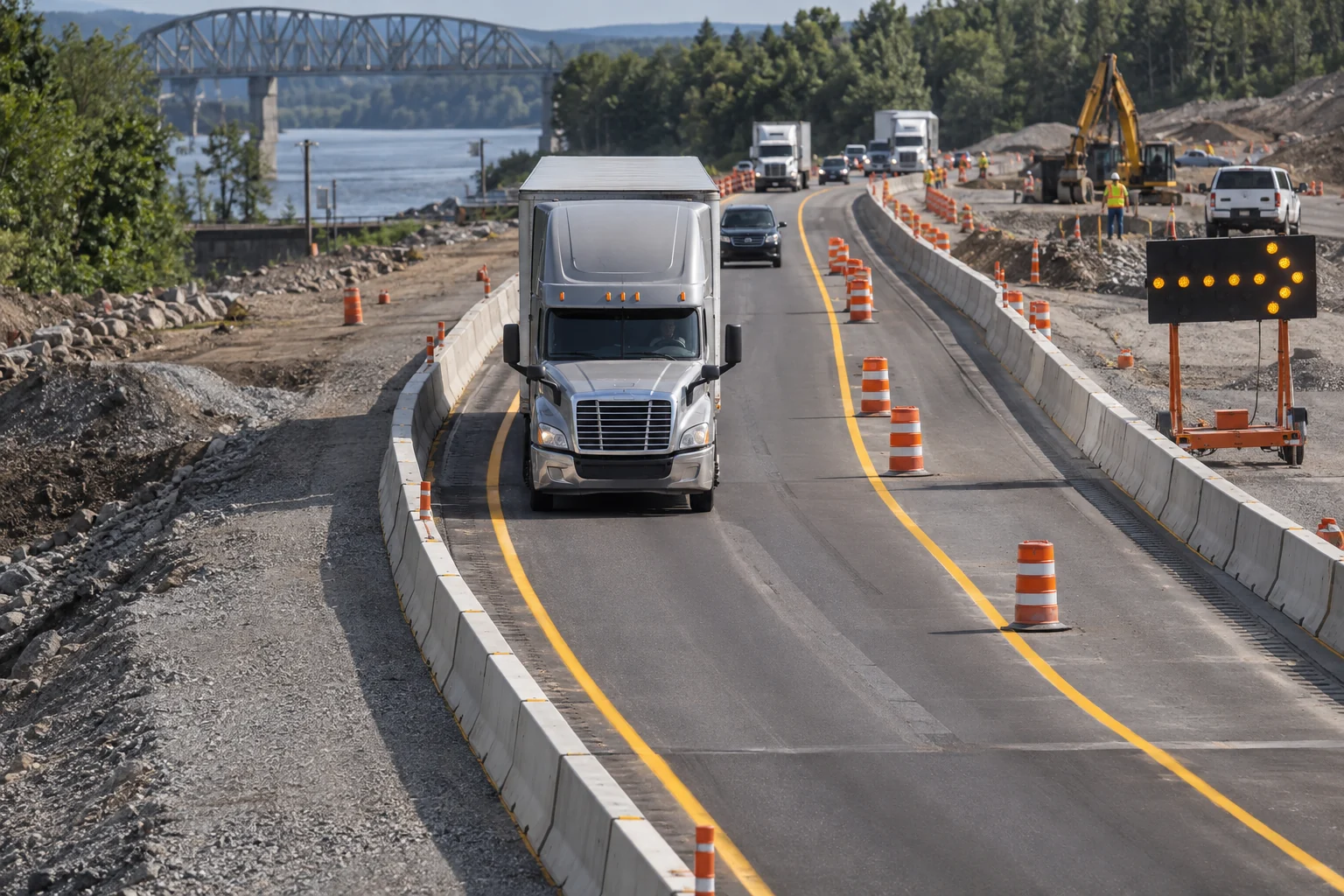
Temporary lanes may shift across old markings or run between concrete barriers. Look through the path rather than focusing only on the barrier beside the cab. Small, smooth steering corrections help keep the tractor and trailer centered.
Know the vehicle's width and watch both mirrors, but do not stare at one side long enough to lose awareness of traffic ahead. Be mindful of trailer tracking on curves. The trailer wheels may follow a tighter path than the tractor, particularly through a sharp temporary alignment.
Expect Uneven Pavement and Reduced Shoulders
Construction may create pavement drop-offs, steel plates, gravel, patched surfaces, or abrupt transitions between lanes. Slow before the rough section and keep a firm, relaxed grip on the wheel. Avoid sudden steering that could move the trailer toward a barrier or worker area.
The shoulder may be closed or too narrow for a tractor-trailer. Identify safe stopping locations before the work zone when possible. Do not assume that an emergency refuge area is long or wide enough for the full combination.
Watch for Workers and Construction Vehicles
Workers may be close to live traffic, sometimes with only cones or a barrier between them and passing vehicles. Slow down, obey flaggers and temporary signals, and leave as much space as the lane allows. Never follow construction equipment through a closed area unless directed by an authorized person.
Dump trucks, sweepers, and maintenance vehicles may enter or leave the lane at low speed. Look for flashing lights and movement near access points. A worker facing away from traffic may not know the truck is approaching, so the professional driver must anticipate the risk.
Remove Distractions Before the Zone
Silence unnecessary alerts, secure drinks and loose objects, and finish radio or climate adjustments before reaching construction. Do not handle a phone, enter information into navigation, eat, or search for paperwork while driving through the zone.
The visual workload is already high: temporary signs, changing lanes, merging traffic, workers, and uneven pavement all compete for attention. Keeping both hands available and eyes moving between the road and mirrors gives the driver the best chance to detect a problem early.
Adapt for Night, Weather, and Long Queues
At night, glare from work lights can hide lane markings or people beyond the illuminated area. Clean the windshield and mirrors, reduce speed, and avoid looking directly into bright lamps. In rain, painted lines and steel surfaces can become harder to see and more slippery.
Long queues also affect the hours-of-service and fuel plan. Dispatchers should treat unexpected construction delay as a safety issue, not pressure the driver to recover every minute. Communicate early when the delay may affect an appointment or legal parking.
If the Truck Develops a Problem
If possible, continue at a controlled speed to a designated refuge or a location beyond the active work area. If the truck cannot move safely, activate warning flashers, contact emergency services or the work-zone authority as appropriate, and follow carrier procedures. Do not step into an active lane or stand between the truck and a barrier where there is no escape path.
Work-Zone Checklist for Truck Drivers
- Review construction alerts and truck-suitable detours before departure.
- Identify the open lane from the first warning signs.
- Reduce speed early and avoid abrupt braking.
- Increase following distance for sudden queues.
- Check blind spots before moving into an open lane.
- Use small steering corrections in narrow temporary lanes.
- Expect rough pavement, drop-offs, and closed shoulders.
- Give workers and construction vehicles extra space.
- Remove distractions before entering the zone.
- Communicate delays before they threaten parking or delivery plans.
Final Thoughts
Work-zone safety depends on preparation and margin. A driver who researches the route, slows before the queue, maintains space, and stays focused has more options when lanes shift or traffic stops. Those extra seconds protect the driver, the freight, nearby motorists, and the people working beside the road.