
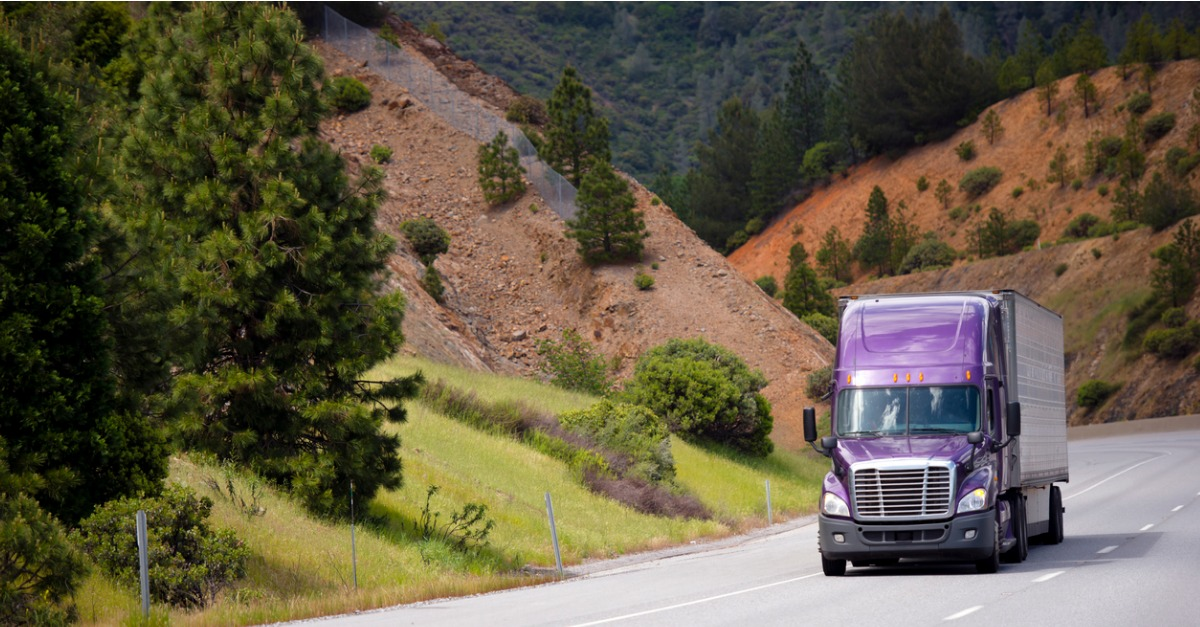
Driving in the mountains has the highest level of difficulty compared to all other driving experiences. Starting with long downhills and steep climbs, unpredictable weather, and little to no escape room, it becomes a cerebral operation of braking instead of just inputting the pedal. For large vehicles, braking and descent in the mountains take on a different defensive tactical approach that concentrates on control of the vehicle, anticipation, and disciplined techniques instead of the speed pressure that is present in other situations.
This environment demands advanced driving skills that go far beyond basic vehicle handling, especially when operating heavy trucks on steep terrain.
The fact that many truck accidents are not due to either traction loss or visibility problems alone is not enough. These accidents yield from the truck driver’s technical mistake such as wrong downhill braking, overheating brakes, misjudging the distance of stopping, and lack of knowledge about the effects of gravity on loaded vehicles. This article illustrates advanced defensive driving principles exclusively for slowing and descending in the mountains; the focal points are the techniques of safe braking, engine braking, and road safety for the long term.
These principles form the backbone of driving safety when operating commercial vehicles in mountainous regions.
Why Mountain Descents Are a Different Category of Risk
Mountain driving completely transforms the physics of car movement. On level ground, brakes are used intermittently, while on mountain roads, braking continuously is the only way which leads to high heat production. A weighty truck barreling down a steep incline actually converts gravitational energy to heat in the braking system.
Here, the fade of brakes presents a critical challenge. When brake parts are overheated, their ability to cause friction decreases. Although the driver might press the brake harder, the distance to stop still increases. Once the beginning of this process occurs, recovery methods will be very limited.
Why Brakes Fail Faster on Mountain Descents
| Factor | Effect on Braking | Resulting Risk |
| Continuous downhill force | Constant heat buildup | Brake fade |
| Heavy vehicle weight | Increased kinetic energy | Longer stopping distance |
| Steep grades | Sustained brake use | Loss of braking efficiency |
| Driver overuse of service brakes | Overheating components | Reduced control |
This is why downhill braking techniques must be applied proactively rather than reactively.
Consequently, mountain descent is not about reacting to speed — it is about preventing speed from being built in the first instance. Advanced defensive driving is based on the perception that after the increase of movement that exceeds the capacity of brakes the control is already lost.
How Trucks Handle Steep Mountain Passes: The Engineering and Skill Behind Safe Mountain Driving
Gravity, Weight, and Momentum at Steep Grades
The size of the truck controls the strength of gravity. Downhill driving with a fully loaded truck subjects the vehicle to enormous kinetic energy unlike conventional passenger vehicles. An insignificant increase in speed can easily double a truck’s braking demand.
Steep grades intensify this appreciation. A continuous six-percent downgrade for a few miles will overload the brake system. Drivers who depend only on the service brakes during a descent literally sacrifice their total braking capacity well before an emergency occurs.
Understanding these forces is essential for anyone driving in mountains, where physics cannot be negotiated.
The foundation of safe mountain driving is to first embrace that gravity always prevails unless managed correctly. Driving defensively in the mountains is operating with physics rather than against them.
Going Down: Pre-Descent Planning the Safe Way
Advanced defensive driving is the preliminary step to the descent. In mountain driving, planning is mandatory; it is a safety requirement.
Before mounting a descent, professional drivers must analyze:
- Grade percentage and length
- Weather and road conditions
- Load weight and balance
- Brake condition and temperature
- Escape ramp availability
Pre-Descent Safety Planning Checklist
| Planning Element | What to Confirm | Why It Matters |
| Gear selection | Correct gear chosen early | Prevent runaway speed |
| Brake condition | No overheating before descent | Preserve braking power |
| Load weight | Known and balanced | Predict stopping distance |
| Weather | Dry, wet, icy conditions | Adjust braking strategy |
| Escape ramps | Locations identified | Emergency recovery option |
Choosing the right gear for the descent is critical. Downshifting too late can create uncontrolled acceleration while trying to shift under load can cause driveline damage. The basic rule is quite simple: drive down in the same gear that you would use to drive up.
This planning phase represents a core brake technique decision that directly affects downhill safety.
This will push the engine braking to absorb the greatest portion of the load, while the service brakes will be left for speed correction rather than control.
Engine Braking: The Leading Technique for Mountain Descent
In the mountains, the engine braking principle is the crucial one for brake safety. Whether employing a Jake brake, an exhaust brake, or a transmission-based retarder, engine braking produces a speed-regulating system instead of a propulsion unit.
The engine braking effectively:
- Lessens service brake dependency
- Keeps the speed down
- Minimizes brake fade risk
- Improves vehicle control on steep grades
The top drivers are aware that engine braking is the only tool that permits mountain descent. Early and continuous utilization of the engine braking function causes no need for aggressive pedal braking afterwards. These methods are part of advanced driving practices specific to heavy trucks.
Defensive driving is the management of speed in a proactive manner. In the case where the truck starts lowering itself down the hill too fast, the only thing that can be done is to apply the brakes to the proper extent in the beginning.
How to safely bring a loaded semi truck down a mountain | Loud jake brake | Beautiful scenery
Long-Grade Descent Safe Braking Techniques
Service brakes should be employed judiciously and not continuously. The proper technique of downhill braking involves the intermittent use of brakes, that are fully engaged but for a shorter time than necessary, instead of applying minor pressure steadily.
Snub braking is the term, commonly used, to refer to the method which allows the brakes to cool down during the brake applications. As the drivers reduce their speed step-wise for short intervals, and then release the brakes, they hold the braking efficiency at standard levels and prevent extra heat from accumulating.
Safe vs Unsafe Downhill Braking Behavior
| Braking Behavior | Heat Level | Control Outcome |
| Light continuous braking | Very high | Brake fade risk |
| Intermittent snub braking | Controlled | Stable braking |
| Engine braking only | Low | Speed stabilized |
| Late emergency braking | Extreme | Loss of control |
These downhill braking techniques are fundamental to safe operation on extended mountain grades.
Continuous light braking is the biggest mistake mountain drivers make. This technique generates more heat without reducing the speed in a meaningful way thus accelerating brake fade and prolonging the distance during the stop.
Advanced defensive driving involves refraining from aggressive actions. During a hill, brakes are a backup system, not the primary speed control device.
How to Brake Downhill Safely | Air Brakes Smart
Brake Fade: How It Develops and Why It Is Dangerous
Brake fade occurs when excessive heat reduces friction between brake components. As temperatures rise, brake linings lose effectiveness, brake drums expand, and pedal response becomes unreliable.
The names of the early warning signs of brake fade are:
- Soft or spongy brake pedal
- Increased stopping distance
- Burning odors
- Reduced braking response despite increased pedal pressure
Recognizing these symptoms is essential for maintaining driving safety during mountain descent.
Once brake fade begins, there are no longer any corrective measures. Engine braking may not be adequate, and service brakes may be thrown off unexpectedly for no apparent reasons. That is why advanced defensive driving lays more emphasis on prevention than reaction.
Mountain driving is not a place where you can afford too many mistakes. Not having a brake fade error is a discipline not just a skill.
Managing Speed and Stopping Distance on Mountain Roads
The stopping distance goes up exponentially when driving downhill. Gravity is like a brake pedal already and putting more air in the brakes increases the distance to slow the truck down compared to flat terrain.
This is why defensive drivers do pay attention to the fact that too much speed on the way down is going to be the only reason why brakes are not going to be effective all the way through. Most speed restrictions on mountain roads are issued with the passenger car in mind rather than with a full truck and cargo in mind. A professional driver will work out a safe speed on the basis of the truck weight, grade steepness, and brake condition.
These calculations are part of practical mountain driving tips passed down through experience.Advanced driving drives the point home: the primary attention is on control, not on compliance. Keeping the speed at a safe level will ensure the effectiveness of the braking system throughout the whole descent.
Vehicle Control on Curves and Switchbacks
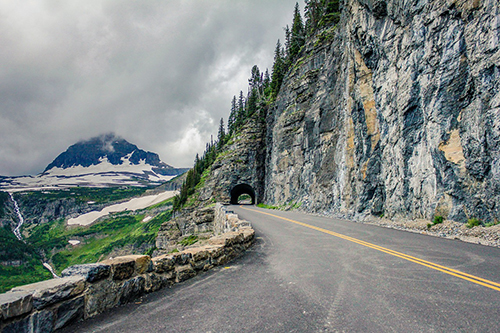
Mountain roads are characterized by the presence of sharp curves, switchbacks, and narrow lanes. Corner braking on a road is quite dangerous, if not the most dangerous, especially for high-center-of-gravity vehicles.
Defensive driving should always include braking before hitting a curve. It means that in the mountains the safe driving approach is to slow down early, place the vehicle correctly, and use engine braking to maintain speed throughout the curve.
Late braking leads to the risk of rolling off track and can cause instability to the vehicle. The advanced drivers treat curves like a deadline to brake, not as a change to speed up in the middle of the turn.
Weather and Road Conditions: Multiplying the Risk
Driving on mountains in winter or wet conditions accentuates every braking risk. Snow, ice, and moisture diminish traction, making both engine braking and service braking less predictable.
In slippery mountain roads, engine braking should be exercised with caution. Excessive engine braking on low-traction surfaces can cause drive wheel lockup. The advanced defense driving approach involves using lower engine braking settings and increasing their distanced.These adjustments are essential mountain driving tips when operating in adverse conditions.
Mountain driving recommendations often highlight patience. Poor traction results in poor margin for correction. Therefore, you should pay even more attention to speed control while extending the stopping distances.
Emergency Situations and Escape Ramp Awareness
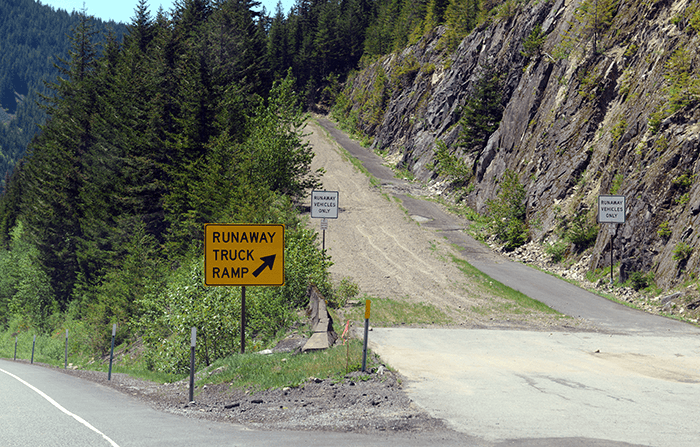
Though tried methods are the best, still the emergencies can occur. The drivers should always be conscious about the escape ramps and emergency pull-offs which are at the mountain descents.
Escape ramps are a kind of last resort safety system. Joining it beforehand is always safer than trying to regain control at excessive speed. The defensive driving that you do through humility involves the recognition that you are unable to stop the braking.
Understanding emergency infrastructure is part of responsible driving in mountains.
The advanced drivers practice and rehearse in their mind their decision-making in case of emergencies to the point they are automatic. The mental maps that they carry of where escape ramps are located clearly alleviate the stress of the moment.
Power of Mind in Mountain Driving
Mountain descent not only involves the technical aspect but also mental discipline. The four main reasons for braking failures are schedule pressure, impatience, and overconfidence.
Advanced defensive driving entails the driver accepting a slower pace. Being a real professional on the mountains is to put safety above the time of arrival. The focus on maintaining the control of the vehicle through uninterrupted attention, overcoming distractions, and respecting fatigue is the primary element of vehicle management.
These habits define true advanced driving behavior in high-risk environments. Experienced mountain drivers have a deep understanding that discipline benefits not just their gear but their careers and even, lives.
Education and Development
Driving in the mountains is not something that comes naturally. Continued training on braking techniques, vehicle control, and the defensive approach is the foundation of long-lasting safety.
Simulated training, mountain route brief, and post-trip evaluations are the modes of skills development for the drivers. Advanced driving is not a stagnant skill but a culture of relentless self-improvement.
The Conclusion: Defensive Braking Is the Key to Mountain Safety
Braking and descending in the mountains are subjects that deserve utmost respect, full preparation, and an advanced defensive approach. Bodies like gravity, weight, and heat don’t forgive their own will which is often seen in a decisive reaction to an inept choice.
Safe braking, the proper use of the engine braking technique, the self-discipline of slowing down, and careful planning are the cornerstones of safe mountain driving. Professional truck drivers who defeat the downhill driving techniques embed it in them, not through luck but through deliberate strategies.
In controlling the mountain driving, the initial step is to secure the control before the descent. The driver who plainly plans, applies the brake judiciously, and stays within the limits of physics will arrive at the final stop safely every time.
FAQ
1. Why is braking in the mountains more dangerous for trucks than on flat roads?
Driving on mountain slopes brings trucks under the influence of an unending gravitational force, which is the reason the brakes are constantly used instead of just often used. The result is, faster heat accumulation, longer stopping distances, and degraded brakes. Improper downhill braking by the driver of a heavy truck can lead to quick loss of steering which is why driving on a mountain road is an advanced skill that the driver needs to learn besides the normal braking skills.
2. What is the safest braking technique for long downhill descents?
The best way to do this is to combine the engine braking and the intermittent “snub braking” also. Engine braking can play the main role in reducing speed, while service brakes are applied firmly for a brief period and then liberated to let some air cool them down. Continuous light braking should be avoided, as it overheats the brakes and drastically increases the risk of brake fade.
3. How does engine braking help prevent brake failure in the mountains?
Engine braking is a function that decelerates the vehicle by causing an engine load rather than using the regular service brakes alone. This measure substantially decreases heat generation in brake mechanisms, ensures normal vehicle performance, and keeps a spare capacity for emergencies if necessary. Engine braking is not only a tool in automatic mode down steep slopes — it is our primary tool for making it safely to the bottom.
4. What should a driver do if speed starts increasing uncontrollably on a descent?
When speed gets higher than the amount which can be regulated only with the engine braking and careful braking, the situation becomes an emergency. Drivers should decrease brake-downs by shifting into lower gears, perform proper snub braking and if that is available, they should use an escape ramp. Fast recognition of limits and deciding correctly are the keys to truck safety in the mountains.