
The perception of truckers on night driving often feels like a riddle. Nighttime routes without cars, fresh air, and no daylight chaos make driving feel more relaxed and controllable, especially when driving in the dark for long hours. Many truckers deliberately drive at night believing it helps reduce stress, shorten trips, and simplify decision-making. These assumptions seem reasonable, yet they form the foundation of some of the most persistent and night driving dangers discussed in the trucking industry.
The real problem is that dangerous night driving barely feels dangerous at the beginning. The set of first conclusions consists of calm, controlled, and predictable. This calmness is tricky. Low traffic volume may not eliminate risk but alter it. Drivers understanding nighttime driving risks is crucial, especially for long-haul drivers, who may make poor judgments because of darkness which later could be irreversible.
The Empty Roads Illusion
The lack of cars is often regarded as the biggest ally of night driving. Having a smaller number of vehicles, drivers are almost a little bit easiest a relaxation. Steering is more fluid, changing lanes takes less energy for calculation, and the road does not seem to be a harsh mistress. But, funny enough, this is the very point where the empty roads illusion is the most dangerous.
No matter how few cars are on the road, instructing to drive at a higher speed is the last thing on one’s mind. Knowing that there is no pressure to keep your distance causes the traffic to follow the norm less. The vigilant is left blinded. These small behavioral changes lead to decreased reaction time and increased risk of night driving for truck drivers.
Empty highways also produce repetitive motion and visual monotony. Gradually, the brain stops being involved, yet the body carries on doing the task. That’s the essence of highway hypnosis. The apparent lack of visual stimulation during driving on a dark road shortens the process of detachment completely. When an object like a stopped vehicle, debris, or wildlife comes in suddenly, the delay in response can then blow it up into an accident in a twinkling.
Why Quiet Roads Increase Risk
Another unfounded belief is that nighttime traffic is really calm and more predictable. Even though the vehicle count decreases, the quality of traffic changes. Dark hours see more tired, impaired, and risk-taking drivers who thus bring more overall night-driving hazards, especially for heavy trucks that need longer stopping distances.
Lighting conditions swim upstream too. Construction zones may be ill-lit. Some vehicles are without proper lights. Wrong headlight functions, most notably the misuse of highbeams, cause glare and worsen depth perception at night. Instead of cutting down unpredictability, they made it worse.
Truck Driving at Night: ESSENTIAL TIPS
Experience Does Not Cancel Biology
A lot of truck drivers rely on experience as a kind of safety net. While experience is important, it cannot change human biology. Circadian rhythms are naturally lower during the night hours, you can’t help it. Acknowledging that no amount of experience can be a substitute for safety is one of the greatest myths that truckers subscribe to.
Familiar routes can be especially deceptive at night. Drivers depend on their memory rather than their real-time perception. Curves look softer than they are. Intersections appear much sooner than they actually do. This autopilot state of mind is in direct opposition to the defensive night driving principles. When fatigue comes into play, experience may bolster overconfidence instead of preventing mistakes.
Night Vision Is Limited, Not Enhanced
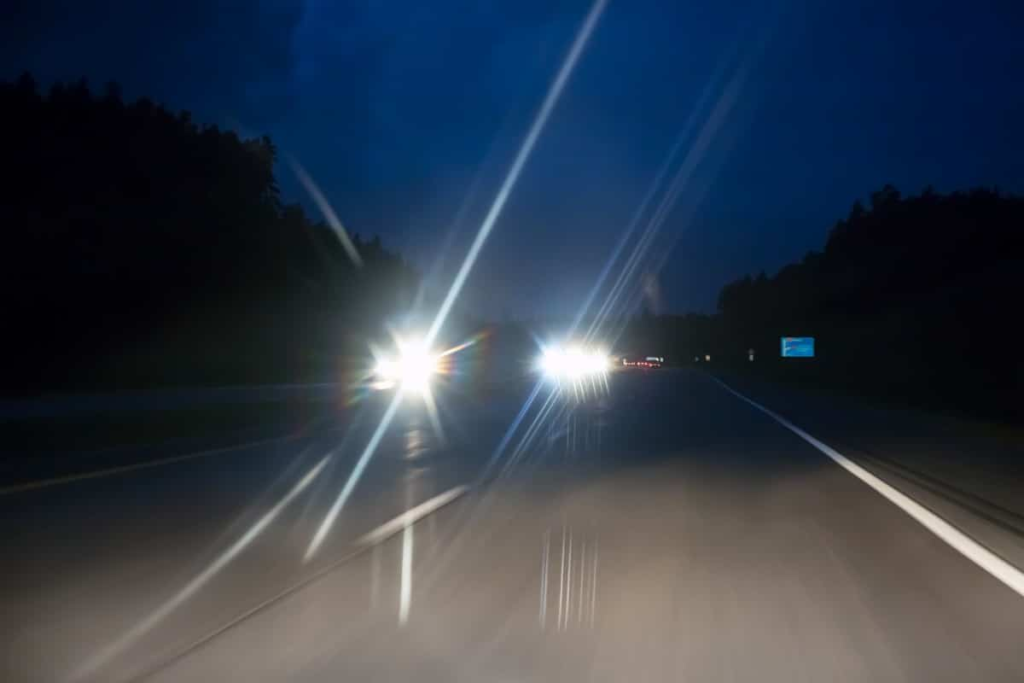
Many drivers believe they have superb night vision while they overlook the primary night vision tips. Actually, human vision becomes enormously poor in low-light environments. Contrast diminishes, peripheral sight narrows, and distance estimation becomes a hider. The dark unveils these tough limitations.
At night, depth perception predominantly depends on the beacons of artificial objects like car taillights or road signs. When those objects are not the same or are unclear of rights and wrongs, speed and distance buoy become guesswork. This is the reason why rear-end collisions at night are common even on roads with little or no traffic.
Night blindness rarely leads to total darkness. It often seems that when moving from bright areas into darkness the adaptation is delayed, the eyes glow temporarily when facing oncoming lights, or objects are blurred from their background. Rain, fog, dust, and worn markings intensify these effects, making low visibility driving a constant strain.
Key visual limitations drivers face at night:
- Reduced contrast and narrowed peripheral vision
- Impaired depth perception relying on artificial light cues
- Delayed adaptation when transitioning from light to dark
- Increased glare from oncoming headlights
Headlights Are Not a Safety Guarantee
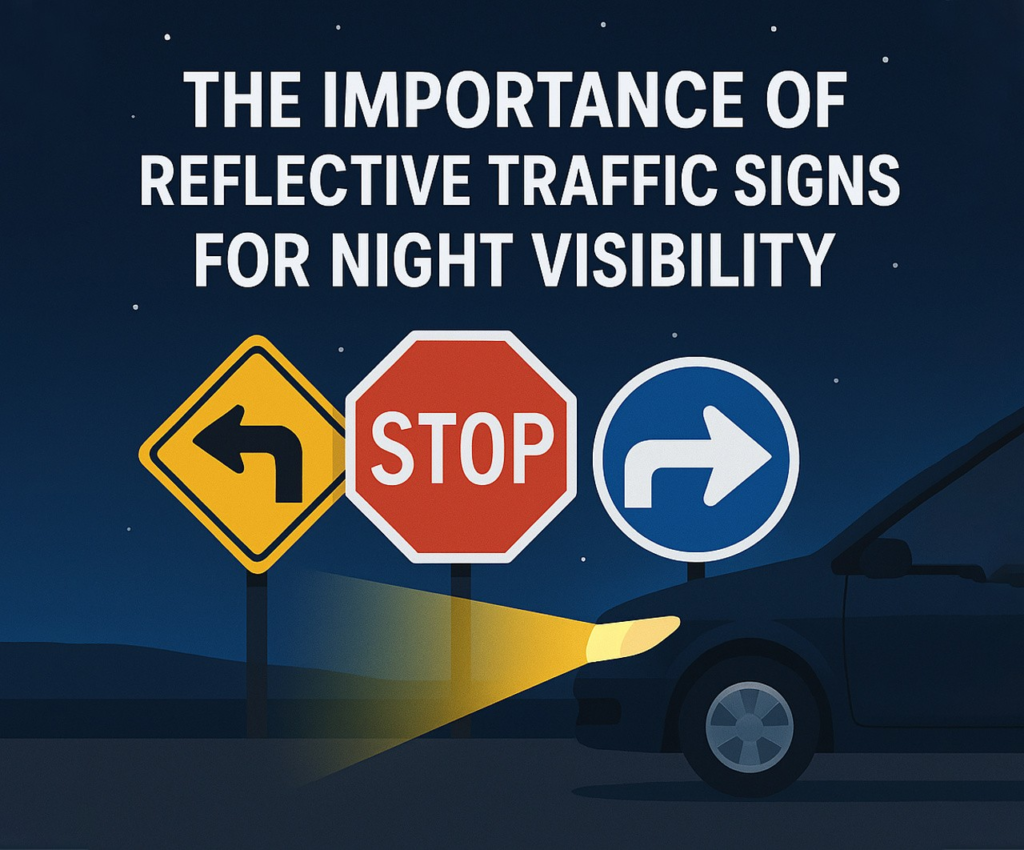
Usage of proper headlights is crucial, yet headlights per se do not guarantee safety. Quite a lot of drivers build up a misconception that if they see a part of the road ahead they will drive safely. This does not take into account the limited distance at which they can see the road safely which is especially true at higher speeds. Proper headlights usage becomes a critical safety factor in these conditions.
Overdriving headlights — moving faster than the illuminated distance allows for safe stopping — is one of the most common night driving mistakes. High beams, when misused, increase glare and reduce contrast. Reflective signs help, but their effectiveness drops sharply in poor weather or when maintenance is lacking.
Headlights, Visibility, and Night Risk
| Factor | Common Assumption | Actual Night Risk |
| Headlight range | “I can see far enough” | Stopping distance exceeds visible area |
| High beam usage | Improves visibility | Increases glare and contrast loss |
| Reflective signs | Always reliable | Degraded by rain, fog, dirt |
| Visual clarity | Stable at speed | Rapidly decreases at night |
The truck configuration brings yet another factor of complexity to that. The height of the cab, the position of the mirror, the length of the trailer, and the blind spot are just some of the factors that limit what the drivers can perceive while driving down the dark road. Acceptance of these limits is the key to night driving safety; it is not called weakness.
Factors that limit a truck driver’s night visibility:
- Cab height and seating position
- Mirror placement and blind spots
- Trailer length and articulation
- Reduced illumination beyond headlight range
Fatigue: The Silent Risk Multiplier
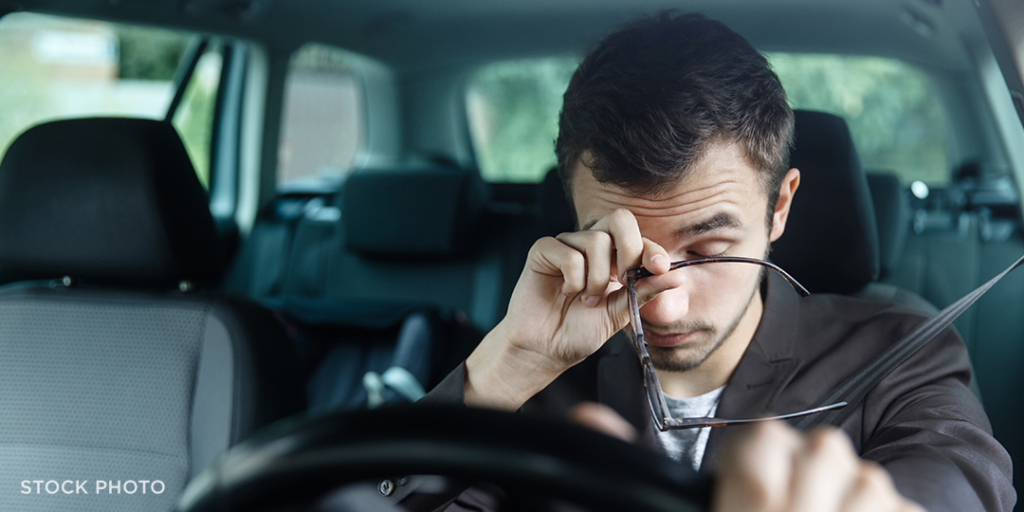
Fatigue driving is among the most common problems in night operations. Even modest fatigue leads to unbalanced reaction time, judgment, and situation awareness. At night, fatigue becomes a quiet monster, building up without any real signs. Fatigued driving often goes unnoticed until decision-making and reaction speed are already compromised.
(This effect is well documented in studies on drowsy driving and traffic safety.)
Circadian low times happen usually between midnight and dawn. During this time period, people will become less alert whether they want to or not. Bandar fatuity combining with lowered visibility makes the gap for mistakes be tremendously low.
Fatigue also boosts highway hypnosis. Long, monotonous stretches of road with minimal stimulus speed up mental detachment, which is the cause of the disproportionate number of nighttime crashes related to fatigue.
Fatigue Effects During Night Driving
| Fatigue Level | Driver Perception | Actual Impact |
| Mild | “I’m fine” | Slower reactions, missed cues |
| Moderate | “Just tired” | Poor judgment, tunnel vision |
| Combined with darkness | Often unnoticed | High accident probability |
| Long monotony | “Autopilot mode” | Highway hypnosis risk |
How fatigue escalates risk at night:
- Reduced alertness during circadian low hours
- Slower reaction time and impaired judgment
- Increased susceptibility to highway hypnosis
- Minimal warning signs before performance drops
Rural Road Driving at Night
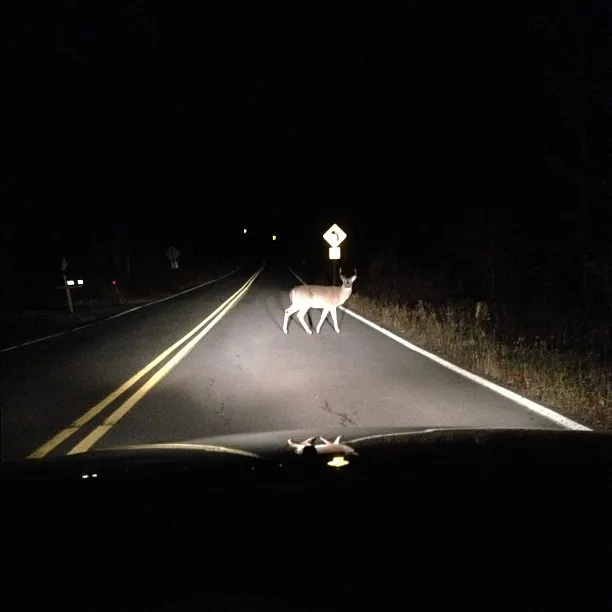
Driving on rural roads at night is a distinctive and oftentimes overlooked danger. There is little to no lighting. Lane markings are worn out. Shoulders disappear completely. Animals are frequent travelers, and farm equipment may run without proper lighting. Rural road driving at night leaves drivers with very limited visual cues and almost no margin for early correction.
Many of the severe accidents on rural roads happen because these routes are perceived as quiet and familiar by the drivers. A correction center is too small. If one thing is not as it should be, like an animal strike, an unmarked curve, or a stopped vehicle, there are no escape options. In such conditions, dark road driving delays hazard recognition and shortens reaction time even for experienced drivers.
For truckers, the focus on rural roads at night relies more on prediction, restraint, and conservative judgment instead of control of speed.
The Myth of Relaxation
Night driving is often described as quieter and more peaceful, but the workload does not disappear — it shifts. With fewer visual cues, the brain works harder to maintain lane position, judge distances, and monitor surroundings, accelerating mental fatigue.
Drivers may feel relaxed due to reduced noise and visual clutter, but relaxation should never be mistaken for safety. Reduced stimulation increases vulnerability to inattention, especially on long-haul routes. This false calm sits at the center of many night driving myths.
Common Night Driving Mistakes
Certain errors appear consistently in nighttime incidents. These include overdriving headlights, misusing high beams, ignoring early signs of fatigue, underestimating secondary roads, and assuming other drivers are alert. These are not failures of skill — they are products of illusion.
Awareness of common night driving mistakes is one of the most effective ways to avoid night driving accidents before hazards appear.
Defensive Driving at Night as a Discipline
Defensive night driving is not simply daytime driving with less light. It is a separate discipline that requires accepting reduced visibility, slower reactions, and unpredictable behavior from others.
Practical night driving tips such as increasing following distance, lowering speed even on empty roads, scanning beyond headlight range, avoiding fixation on single light sources, and scheduling breaks strategically are some of the habits that reduce night driving hazards.
Choice of the route also matters. Choosing well-lit roads with available services often lowers overall risk compared to isolated shortcuts, even if travel time increases slightly.
Letting Go of Dangerous Myths
The main risk of night driving is misplaced trust — trust in empty roads, experience, vision, or routine. They can fail at night. Dangerous driving myths continue to exist as they are logically sound. Calm roads are safe. Familiar routes are easy.
True safe night driving practices call for discarding these beliefs and acknowledging the limits that darkness imposes.
Confidence is not the currency of night driving. It is mindfulness, preparedness, and restraint that are rewarded.
Mini FAQ
1. Is it true that driving at night is more dangerous than driving during the daytime?
Night driving entails risks that are entirely different but are not necessarily less than daytime driving. Factors like poorly lit surroundings, tiredness, and slower reaction time are often more crucial than traffic sometimes being light, especially for truck drivers on long routes.
2. What is the reason behind the rise in accident cases on unoccupied roads at night?
Unoccupied roads give a false sense of security. Drivers get relaxed, tend to drive quickly and are less vigilant which raises the chances of them being late to react to sudden problems.
3. What is the result of fatigue in driving at night even if I am not sleepy?
A long night of driving causes fatigue to set in. One may not be jaded at all, but the brain loses several faculties like judgment, attention, and reaction speed which increase the risks of normal situations.
4. What is the reason underlying the fact that accident rates are especially fife in the dark on rural roads?
Rural roads lack light for the most part, markings are gone, and there is no extra room for the driver to make a mistake. Nighttime driving on these roads is particularly harsh because of the wildlife, unlit equipment, and sharp curves.
5. Do the good headlights completely solve the night visibility problems?
No. Headlights are helpful but they still can not make up for the loss of contrast, glare, night blindness, or limited stopping distance. Factors besides illumination, like air and weather, too, affect visibility at night.