

In the trucking and freight transportation industry, it is uncommon to see accidents occur independent of each other. This is usually due to the fact that they represent the final outcome to a long chain of various decision-making errors that were made under stress and pressure by operators — such as time constraints, inadequate vision, traffic congestion, or lagging reactions to changing conditions. A smart rerouting strategy is one of the most important tools for cutting such a problematic chain before it ever reaches a critical point.
In modern delivery logistics, smart rerouting increasingly functions as one of the most effective logistics solutions for accident prevention.
Route optimization has evolved from just about cutting miles or saving fuel. Trafficking aids such as pathfinder technology are now extended to help with accident prevention, driving safety, and the success of the whole operation in the supply chain. If applied appropriately, dynamic routing can prevent collisions, protect drivers, and even bring successful deliveries if the situation deteriorates rapidly.
This shift marks the evolution of rerouting technology from efficiency-focused planning to risk-aware decision-making.
This article provides three – case studies of real-life situations in which smart rerouting both diverted an accident and a delivery failure. In all three stories, routing decisions were made at the most favorable moment that evolved a high-risk scenario into a controlled outcome.
Each case analysis demonstrates how rerouting decisions minimized risk before a critical failure occurred. Studies of dynamic routing in transportation networks show that adaptive rerouting in response to real-time conditions such as accidents, congestion, and weather improves operational resilience and reduces risk exposure – arXiv
Rerouting: The Redefining of the Logistics Tool
The traditional routing method, which was the most effective one, was focused on the following: shortest distance, lowest tolls, and fastest arrival. Logistics of the modern day are an elaboration of that tightly focused route. The systems used at present are:
- Real-environment traffic data
- Road closures and incident reports
- Load sensitivity and vehicle limitations
- Driver fatigue and hours
- Route scoring based on risk
These elements form the foundation of modern logistics solutions designed to prevent incidents rather than react to them.
Optimised route planning in the Smart Logistics System with HERE
Routing has shifted from static planning to dynamic dispatch based on this. Once the decision-making process starts changing, so do the conditions. Flexibility is the key competitive factor in the market, where constantly changing circumstances can shift a simple delay into an accident.
How Routing Priorities Have Shifted
| Earlier routing focus | Expanded smart rerouting focus |
| Shortest distance | Risk scoring |
| Lowest tolls | Driver fatigue awareness |
| Fixed routes | Dynamic dispatch |
| Speed-based planning | Incident prevention |
Case 1: Mountain Weather Shift and a Prevented Jackknife
The Situation
A long-haul truck carrying temperature-sensitive medical goods was scheduled to pass through a mountain corridor at night. The forecasters’ initial forecast was for light snow, which was well within the operational limits. All of a sudden, the weather got worse midway on the route. Temperatures fell, winds increased, and the road began to freezing rain paving.
Mountain routes significantly increase exposure to severe driving conditions where a single mistake can escalate into a prevented incident only through early intervention.
It was proven that this segment of the road tended to have several rollovers and jackknifed trucks under the icing conditions. Following the original route would not just make the chance of rolling the truck extremely high, it would also risk damage or a delay of the delivery if cargo was affected.
The Rerouting Decision
The fleet’s live-tracking system was the first alarm device, which recognized a large influx of reports about accidents around the truck’s route, at the same time as road condition sensors and third-party data feeds heeded the warnings for black ice.
This real-time tracking capability enabled emergency rerouting before the driver entered the most dangerous segment.
Instead of forcing the truck forward, the dispatch system sprang into action and wowed the drivers with the rerouting. The route was to the altitude road, which was longer but was also managed by the road treatment team and had better traction.
The Outcome
The reroute with added 52 miles and had one hour of delay in the delivery; however, it prevented the icing road exposure and reduced the downhill braking to a substantial level which are the most critical things for heavy vehicles.
This rerouting decision clearly minimized risk while preserving delivery integrity.
The driver successfully passed the route, and the medical consignment met the temperature requirements. The rerouting decision was the one that played a crucial role in accident avoidance, driver safety, and overall operation success.
Risk Factors and Outcomes
| Factor | Original route | Rerouted path |
| Road condition | Freezing rain | Treated surfaces |
| Terrain | High-risk mountain descent | Lower elevation |
| Braking demand | Elevated | Reduced |
| Delivery integrity | At risk | Preserved |
Key Takeaways
The smart rerouting of the situation overweighted risk reduction over speed in this case. Dealing with the whole issue of route optimizing as a security measure rather than a flight of ideas has freed both the driver and the supply chain from a psychological cost.
Case 2: Urban Bottleneck, Blindside Risk, and Collision Avoidance
The Situation
A regional delivery truck handling the transportation of last-mile construction materials was driving through a congested urban area in the afternoon rush hour. On a prime arterial street, there was a farcical lane that was unreported, closed, and distanced by the congested traffic. The traffic slowed down abruptly and the cars started HARAKIRI.
This scenario highlights how last-mile delivery amplifies risk when urban congestion limits visibility and maneuvering space.
The planned route first turned the longitudinal line of almost potholes, with the tight right-turn maneuver across the road to the left of several lanes. Chicago Spike lurched in the sway of stop-and-go cars and could really uplift the driver’s spirits.
Surrounding drivers exhibited unusual behavior, making the situation even harder to manage for the driver. The dense traffic zone and the driver not being able to see what was around him made the right-side blind spot more pronounced than ever before.
If the truck had been driven as per the plan, the danger of sideswiping another vehicle, or hitting a pedestrian increased significantly.
The Rerouting Decision
With pack shipment tracking and live traffic feeds, the fleet management system was able to draw the deduction on the congestion increase and pedestrian incident level for the intersection in the near future.
This real-time tracking enabled proactive route management in a high-risk urban environment.
The system gave a suggestion for a few minor cross streets detouring through the commercial area, with wider lanes, no pedestrians, and traffic lights. Dispatch confirmed the rerouting and it was updated to the driver in real-time.
The Outcome
The little distance increased to the recommended route but there was no bad turn. No turnovers at the interaction area helped the driver to proceed safely with the delivery.
The rerouting decision prevented an incident that later occurred at the original intersection.
The reports came on-line, stating that a different commercial vehicle involved in the accident occurred at the original intersection.
Key Takeaway
Route management was the reason here. Instead of human unpredictability, traffic conditions were the main hazard factor. Traffic behavior has been averted thanks to the smart rerouting that minimize the risks.
This case demonstrates how delivery logistics benefit from proactive rerouting under urban pressure.
Case 3: Highway Closure, Fatigue Risk, and Prevented Chain-Reaction Accident
The Situation
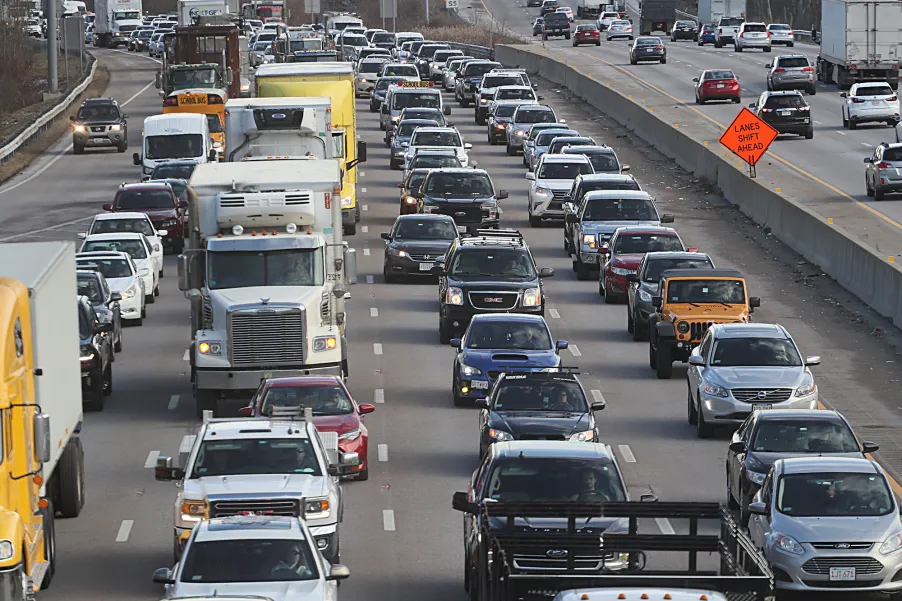
A carrier carrying freight across the state was driving overheated time-critical stock. At the end of the available driving hours, the main road was closed due to a crash between multiple vehicles, which had the effect of leaving traffic backed up for a long time.
Highway congestion combined with fatigue creates conditions where improved efficiency must be balanced against safety.
The driver was running short on time and getting fatigued. The consignment of goods delayed in stop-and-start traffic which was to be ignored often led to the drivers’ distraction, problems of perception, and resulted in an increased likelihood of rear-end collisions, which, in conjunction with, other trucks, could have resulted in chain-reaction accidents.
The Rerouting Decision
The fleet’s real-time dispatch evaluated the possible paths alternative in real restructure. A side route was introduced that would allow consistent traffic flow, a stop for refreshments, and less congestion, even at a low cruising speed, although it would have been slower.
This emergency rerouting decision prioritized driver alertness over arrival time.
The system implemented the smart reroute by coordinating with the data for driver hours to ensure compliance and at the same time minimize fatigue exposure.
The Outcome
The driver managed to leave the highway congested enough to reach that area. The alternative route provided consistent movement, and it cut down on the stress and fatigue, and it improved alertness.
This approach improved efficiency by maintaining controlled movement instead of stop-and-go congestion.
Contractual obligations were met, although the product reached the destination with a short delay from the previous expectations. The main thing is that the driver managed to prevent any risky scenarios connected with fatigue, which in turn, could have resulted in a serious accident.
Fatigue and Route Control
| Condition | Highway congestion | Rerouted path |
| Traffic flow | Stop-and-go | Consistent |
| Driver fatigue | Increasing | Stabilized |
| Collision risk | Elevated | Reduced |
| Delivery outcome | At risk | Completed |
Key Takeaway
In this case, right routes were taken with driver safety and other human factors in mind and not just focusing on the infrastructure issues. The prevention of accidents lay in the identification of fatigue as a risk factor and the modification of the path accordingly. Positions in the routing decisions made directly correlated to risk factors in transportation safety and effectiveness in urban freight operations.
Overall These Cases Highlight Smart Rerouting
All three separate situations have some features in common:
- Rerouting is not just a reaction, but it is preventive.
- Rerouting integrates safety data not just distance metrics.
- Rerouting protects drivers every bit as much as cargo.
- Rerouting maintains supply chain continuity under pressure.
These outcomes show how rerouting technology strengthens logistics solutions under stress.
Each case illustrates how the use of live data in logistics transforms routing into a safety strategy.
The Use of Technology in Modern Days Route Optimization
Modern rerouting is built on an abundance of data:
- Traffic congestion and incident reports
- Road conditions and weather monitoring
- Vehicle performance indicators
- Driver status and hours of service data
These systems enable emergency rerouting before delays cascade into failures.
Some systems are even employing autonomous routing logic. This is where algorithms will automatically recommend alternatives before the operators make their own assessment of a risk.
When these tools are applied properly, they allow fleets to reach higher efficiency metrics without sacrificing safety — something that is a hard balancing act to maintain.
Why Routing Errors Are Often the Initial Source of Delivery Failures
Most delivery failures are attributed to the weather, congestion, driver error, etc; however, they actually tend to arise from traffic that is delayed because of the routing error error. Waiting too long to route an offering leads to less options being available and more risks being taken.
Early routing decisions reduce the likelihood of delivery logistics breakdowns under pressure.
Early routing through smart decisions buttonhole the trucks space and time in a transportation network and preserve the resources from cascading ecological failures.
Smart Rerouting Is the Competitive Advantage
In addition to safety, effective rerouting positively impacts customer trust. A steady stream of deliveries against all odds raises the credibility of the supply chain.
Fleet management teams are benefitting from the re-routing capabilities because their success is translating into:
- Lower accident rates
- Less insurance exposure
- More drivers retained
- Stronger operational resilience
These results confirm that smart rerouting delivers improved efficiency across logistics operations.
These points not only affect the day-to-day operations of fleet management but they also push long-term success in a competitive logistics business.
Conclusion: Rerouting Is a Safety Decision, Not a Detour

The smart rerouting is not just about avoiding inconveniences — it is about avoiding consequences that are hard to reverse. Every reroute was a conscious decision to minimize risk, keep drivers safe, and protect the integrity of deliveries.
For the modern trucking sector, route optimization is already being seen as part and parcel of accident prevention, and driver safety.
Fleets which see rerouting as the primary function of safety, rather than an afterthought, consistently perform better than those who do not.
Typically, the fastest option is not the safest route. Moving to safety just is not your main goal. It is the ability to identify the moment and to follow through.
Mini FAQ
1. What is smart rerouting in trucking?
Smart rerouting involves making dynamic changes to a truck’s route depending on the real-time condition of the truck, such as accidents, congestion, weather, driver fatigue, or road closures etc. Its principal aim is to avoid accidents and to ensure the reliability of delivery which is not just a time or fuel-saving aspect, but more than that.
2. How can rerouting prevent accidents, not just delays?
By sending trucks away from high-risk areas like a closed icy mountain road, a congested city street, or a fatigue-induced traffic jam, the smart rerouting makes trucks less likely to be in conditions where accidents may occur thus.
3. Does smart rerouting increase delivery time?
There are times when rerouting adds distance or time, but this is uncharacteristic for the company. However, tasks that would normally be delayed for accidents, road closures, or cargo damage are dealt with again granting the company better delivery rate result.
4. Who makes rerouting decisions: the driver or dispatch?
Smart rerouting commonly integrates the electronic systems, which are tracking trucks, forecasting time and weather and dispatcher control together. Thus, they can offer the driver with the options of safer routes while he/she decide them weather to use them or it only depends on the time.
5. Why is smart rerouting especially important for truck drivers?
Truck drivers encounter long stopping distances, fatigue limits, blind spots, and load-related risks. Smart rerouting is a tool that can remove or manage these issues through steering control under scala conditions.