

Chasing extra runs may seem so much easier as a way to increase income. One more delivery means more distances, more delivery fees, and an apparently strong revenue stream. This, in particular, is how logic works in the trucking business, especially in the case of regional and last mile delivery operations. Why not fit in another delivery run and earn maximum revenue if the truck is already on the road?
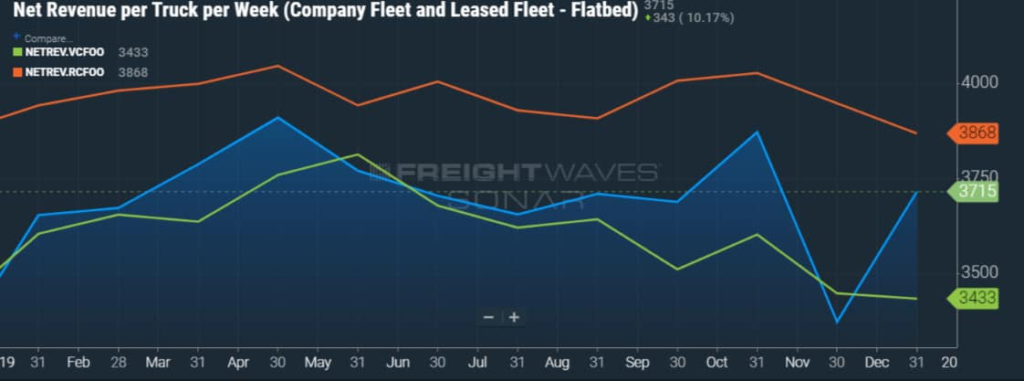
To a lot of drivers and dispatchers, additional trips seem like no-brainers. The truck is already fueled, the driver is on duty, and the road looks straight. But the correspondence between overall trucking profitability and customer logistics is not on instinct but rather about margins, timing, and strict cost control. It is really common to see charts showing that more deliveries, which seem to produce extra revenue, actually reduce the profit margin of real logistics expenses.
This is often the first sign that increasing deliveries does not automatically translate into higher profitability.
This phenomenon occurs because the deliveries that should have gone out still need to be made by the extra runs.
Revenue Is Clear, However, Profit Looks Hidden
The difference in truck driving operations is one of many reasons that revenue growth is confused with profit growth. Tracking revenue growth is as easy as adding up the price tags for each delivery run and referring the dispatch systems to the prom…Money, rents and other payments for the facility. But profit hides behind fuel consumption, time loss, equipment wear, and operational friction.
This gap is where extra deliveries quietly start turning into a profit killer.
An additional missed run may bring more to the revenue stream, yet be a new hidden expense that is not thought of at the time of dispatch planning. Fuel consumption rises slightly, the idle time on the docks increases, and the congestion in the city only stretches the driving time. Not taking into account every minor inefficiency adds to the issue of the cost per delivery.
If a fleet or owner-operator does not pay attention to the profit analysis, it may seem to be busy and productive while quietly losing money on each of the additional trips.
Over time, this pattern creates diminishing returns across the entire operation.
Inefficiency of Additional Trips Due to Less Profit
In principle, increased delivery of goods should enhance operational productivity by distributing fixed costs over a larger number of runs. But in reality, trucking does not comply with that logic. Each of the added trips introduces new complexities into the operation. Complexity invariably raises logistics costs.
The messier the routes become, the more precarious becomes the timing. One late stop affects the next one. The traffic changes. The dock availability disappears. Driver fatigue increases. These all lead to lower operational efficiency and hinder delivery performance.
Without proper run optimization, these inefficiencies multiply very quickly.
This is where the returns diminish. The first few runs of the day are generally the most profitable. Each new run then delivers less profit than the prior one and sooner or later the gain disappears.
This is a textbook example of diminishing returns in trucking operations.
Revenue vs Profit Across Additional Delivery Runs
| Number of Runs | Revenue Growth | Logistics Cost Growth | Net Profit Impact |
| Base route (planned) | Stable | Controlled | Positive |
| +1 extra run | Moderate | Slight increase | Small gain |
| +2 extra runs | Higher | Noticeable increase | Flat |
| +3 extra runs | High | Sharp increase | Negative |
| +4+ extra runs | Very high | Uncontrolled | Profit loss |
This trend spells out that there is no logical correlation between the increase in deliveries and the profit maximization.
In many cases, increasing deliveries simply accelerates cost growth faster than revenue growth.
The Hidden Cost of “One More Run”
Extra runs are especially dangerous because many of their costs are not assigned to individual trips. For example, deadhead miles between deliveries rarely appear in delivery reports. Waiting time without detention pay quietly drains hours. Small mechanical wear accumulates faster than planned.
In last-mile delivery and courier services, these hidden costs multiply. Frequent stops increase brake and tire wear. Constant idling increases fuel burn. Parking delays introduce stress and time loss. Even when delivery fees look acceptable, the true cost per delivery often exceeds expectations.
This is how extra deliveries become a profit killer without being immediately visible.
For this reason, additional trips can appear profitable on the surface but, in fact, be detrimental to the profitability of delivery.
Delivery Efficiency Outpaces Higher Delivery Volume
Truck driving is an efficiency game, not an output game. Two optimized routes can probably outperform five hurried routes brought on by a hasty end of shift. Delivery efficiency reaches its highest point when routes are predictable, the dwell time is controlled, and the trip optimization is realistic rather than optimistic.
Operational efficiency also protects drivers. Fatigue contributes to slower reflexes, a higher rate of mistakes, and longer turnaround times. Each additional trip becomes more costly than planned when efficiency is down.
This is why run optimization matters more than raw delivery volume.
Run optimization is not about fitting extra stops into the same day. It is about selecting delivery runs that protect the profit margin and do not weaken it.
Signs That Extra Runs Are Hurting Efficiency
- Increasing unpaid waiting time between stops
- Rising fuel consumption per mile
- Missed or rushed delivery windows
- Growing driver fatigue late in the shift
- Maintenance issues appearing earlier than planned
These warning signs usually appear long before profit reports reveal a problem. These red flags often appear a long time before the profit report actually records a problem.
By the time profits drop, the operational damage is already done.
When Extra Runs Actually Make Sense
Not all additional trips are bad. Some extra runs can be a worthwhile investment when they fit naturally into the delivery strategy. When stops are geographically clustered and dwell time is predictable or compensated, delivery efficiency remains intact.
Extra deliveries also make sense when they improve ROI on deliveries without pushing drivers beyond optimal performance levels. In these cases, the added run strengthens the revenue stream instead of weakening it.
Here, extra deliveries support profitability rather than undermine it.
The difference is planning. Profitable extra runs are planned deliberately, not accepted reactively.

When Additional Trips Become a Profit Killer
Adding extra runs absolutely cuts down profits when they push the workday into inefficient hours, they create unpaid downtime, or they increase deadhead miles. These trips often maneuver among unwarranted optimistic assumptions that cannot stand the test of reality.
In these scenarios, additional trips quickly become a profit killer rather than a growth opportunity.
When fatigue goes up, performance falls off. Drivers start moving slowly, make more errors, and the recovery time will add into the next day. All of this eventually makes operational efficiency worse and long-term profitability drops.
In such a situation, it is often the case that maximizing revenue can actively work against maximizing profit.
Profitable vs Unprofitable Extra Runs
| Factor | Profitable Extra Run | Profit-Killing Extra Run |
| Distance between stops | Short and clustered | Long and scattered |
| Waiting time | Predictable or paid | Unpaid and uncertain |
| Fuel efficiency | Stable | Declining |
| Driver condition | Within optimal range | Fatigue-driven |
| ROI on deliveries | Positive | Negative |
Courier Services and Last-Mile Operations: The Highest Risk Zone
Courier services and last-mile delivery fleets are particularly vulnerable to profit erosion. High stop density creates the illusion of efficiency, but constant interruptions drive up logistics cost.
In last mile delivery, the impact of extra deliveries is amplified faster than in long-haul operations.
Parking challenges, a short delivery window, and frequent customer interaction reduce operational efficiency. If they were run on proper optimization, these businesses would suffer from expanded costs per delivery even when the volume of deliveries goes up.
This is why courier services need to be particularly disciplined when considering extra trips.
Questions to Ask Before Accepting Extra Runs
- Does this run increase or reduce cost per delivery?
- Will it push the shift into high-congestion hours?
- Is waiting time guaranteed or speculative?
- Do delivery fees justify the added logistics cost?
- Will this trip hurt tomorrow’s operational efficiency?
If these questions cannot be answered clearly, the run is usually not worth taking. This decision framework protects profitability when increasing deliveries feels tempting.
Profit Comes From Control, Not From Chasing Volume
In the trucking industry, profit is seldom lost due to one bad decision. It is the cumulative effect of the long-term acceptance of marginal runs which are good on their own, but harmful to the fleet as a whole. After all, the problem loadings from these runs add to logistics costs, weaken delivery performance, and eventually lead to a decrease in profit. Unchecked increasing deliveries often accelerate this downward cycle.The drivers and fleets that are the most successful are those that are capable of practicing discipline and say no to the volume. They view the delivery strategy not as a gutter, but as a filter.
Final Thoughts: Why Saying “No” Can Be Profitable
Is Your Truck Profitable? 2024 Trucking Business Profit and Loss P&L
Chasing more runs might feel productive, but productivity without a margin is an illusion. Increasing deliveries does not automatically want to lead to higher profits in the trucking. Unless you conduct a careful analysis of the profit and the trips become optimally planned, the additional trips might often be the very factor that destroys delivery profitability.
Without clear run optimization rules, growth quickly turns into diminishing returns.The true path to profit maximization lies in control rather than exhaustion. The run you cede today might be precisely why your operation will still be profitable tomorrow.
Frequently-Asked Questions
Know Your Cost PER DAY Or Your Trucking Business Will Fail
1. Is chasing extra routes a good method to make more profit in trucking?
Not necessarily. Chasing extra runs usually is a way to increase revenue but it is not a guarantee for higher profit. In many truck driving businesses, the increase in trips only adds logistics costs faster than income, which lowers profit margin. Without clear and precise profit analysis, additional runs can somewhat easily become a profit killer.
2. Why do the extra deliveries balance with less profit so often?
Extra deliveries tend to conceal costs such as unproductive wait time, deadhead miles, fuel waste, and quick-pacing equipment failures. These expenses add to the cost per delivery and even though total revenue is up, the returns are negative.
3. What conditions can help me notice when extra trips are not worth it anymore?
When shipment cycles become less efficient, additional trips stop making sense. The warning indicators are the increasing fuel consumption per mile, neglected delivery schedules, driver fatigue, and expanding downtime. Once these matters crop up, the likelihood is that adding deliveries will usually remarry hurt overall profitability.
4. Is it last mile delivery and courier services the more risky extra runs than the others?
Yes. Last mile delivery and courier services have higher risk because frequent stops, parking delays, and short delivery windows amplify logistics cost. They are the operations where extra deliveries cut operational efficiency quicker than in long-haul trucking.
5. What importance has run optimization to the decision to take extra trips?
Run optimization is a practical tool to see whether a new run promotes or harms profitability. Well-done run optimization envisages route clustering, idle time, fuel consumption, and driver condition. The lack of such a tool often will lead to the decision to allow extra trips being made with a reactive attitude and as a result, they become profit killers.
6. Is maximizing income the same as maximizing profit in trucking?
No. Maximizing income tracks the number of additional delivery trips whereas maximizing profit is primarily focused on cost per delivery and performance. In trucking, exposed deliveries without cost control often direct to diminished returns.
7. When can you make actual profits from extra runs?
Extra runs can be improved when they are geographically efficient, fairly compensated, and do not lengthen the shift into inefficient hours. In such cases, the ROI on deliveries remains positive, with operational efficiency intact.
8. What is the most profitable decision sometimes on saying “no” to extra runs?
Refusing the extra runs preserves profits, driver performance, and long-term operational efficiency. Turning down low-margin or high-risk trips prevents logistics costs from growing out of control and thus helps in maintaining sustainable delivery profitability.