

For novice truck drivers, turning and lane changing are not solely driving abilities; they also constitute the main safety procedures, determining the successful trip on the road in the long run. Most of the driver mistakes that occur at the beginning of one’s career in driving trucks are not caused by high speed or extreme conditions. They take place in simple maneuvers: a right turn at the intersection, a lane change on the highway, or a merge in moderate traffic.
This is especially true during beginner driving, when habits are still forming and mistakes tend to repeat.
In contrast to passenger vehicles, trucks are characterized by having longer stopping distances, wider turning radii, bigger blind spots, and slower maneuverability. Hence, a turn or lane change is the result of logical thought rather than the reflex. For a beginner, the difference between safe driving and potential danger lies in the ability to reason and follow organized steps.
Understanding how to turn safely and how to approach basic driving maneuvers is essential at this stage.
This article specifically deals with the safe turning and lane-changing procedures for beginner truck drivers. It stresses the importance of using clear checkpoints that support defensive driving and traffic safety, while also offering practical beginner driver tips.
Why Turning and Lane Changing Are High-Risk for Beginner Truck Drivers
Many novice drivers do not realize that a truck requires significantly more room and planning than other vehicles. New drivers often keep habits from car driving which do not apply to large vehicles. A truck’s trailer does not follow the same path as its cab, blind areas are much bigger, and the surrounding vehicles often fail to predict the intentions of the truck.
During beginner driving, this mismatch in expectations creates additional risk.
Turning and changing lanes are a combination of potential risks: mirrors, signals, blind spots, speed control, road rules, and interaction with unpredictable traffic. When these steps are hurried or missed, then even low speeds can go substandard, leading to sideswipes, curb hits, or merge conflicts.
These driving maneuvers require discipline, not improvisation.
As a result, the only way for truck drivers to ensure road safety is to get these two maneuvers right from the beginning.
The Step-by-Step Guide for Beginners to Safely Turn
The safe turning process begins well before the actual turn. The mistake that beginners commonly make is that they forget to focus themselves on the whole maneuver but to the steering wheel alone.
A correct turning procedure always starts with preparation, not movement.

The first consideration is to reduce the speed early. Never should a truck enter the turn with a sharp brake. The vehicle has to decelerate beforehand, thus, allowing it to keep being stable throughout the maneuver. This is crucial for right turns especially where trailer off-tracking can lead to hazards.
This is one of the most important safe driving tips for beginners.
The second detail is lane positioning. The truck has to be properly placed within the lane before the turn starts. Bad positioning of the truck increases the threat of hitting the curb or vehicles, or forced corrections during the turn.
The following thing to do is to check your mirrors. It is so important to ensure both side mirrors are scanned to check if there is no vehicle, cyclist, or pedestrian entering the turning space. Mirrors checking should be a habit for beginners rather than just a quick glance.
The procedure for the signals is next. The operator should report the turn signal early enough to be clearly understood. For the truck, the signal only drawback is the lateness, which makes it less safe for the traffic.
Before moving the steering wheel, a blind spot check is in order. This is especially suitable for right turns where smaller vehicles may appear out of the blue. Defensive driving means to think that something may be there even if the drivers’ mirrors seem clean.
Knowing how to turn safely depends on respecting blind spots at all times.
When turning, the steering should be both smooth and steady. Erratic signals cause the vehicle to destabilize and boost the trailer swing. Acceleration should be done gradually until the truck hauls the turn completely. Making Turns Safely
Turning Procedure Checklist
| Step | Action | Safety Checkpoint |
| 1 | Reduce speed early | Truck is stable before entering the turn |
| 2 | Proper lane positioning | Trailer off-tracking is controlled |
| 3 | Mirror check | No vehicles, cyclists, or pedestrians nearby |
| 4 | Signal procedure | Turn signal activated early |
| 5 | Blind spot check | No objects in critical zones |
| 6 | Smooth steering | No sudden wheel input |
| 7 | Controlled acceleration | Turn fully completed before speeding up |
Navigating Tight Corners in Urban Environments
Urban driving conditions bring extra challenges for beginner drivers. Lines that are very close together, vehicles parked on the street, corridors made for pedestrians, and cyclists want to be observed more.
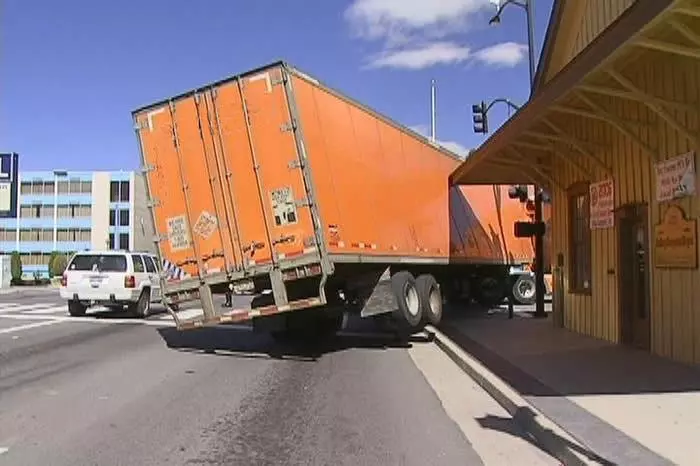
In the case of turnings, remember that the trailer will cut inside the cab path. As a result, you will need a little more space and very much patience. Doing the maneuver too quickly raises the chance of hitting fixed objects.
Urban turning is one of the most demanding driving maneuvers for beginners.
When dealing with the lack of space, the best option is to reduce the speed and full concentration. Following the proper procedure for a turn should prevail over simply being fast.
Lane Changing: Why Trucks Can’t “Sneak” Between Lanes
Lane changing in trucks dramatically differs from this operation in cars. Trucks, as a rule, need space to be committed. They cannot do a quick acceleration to avoid a mistake nor can they move sideways suddenly.
This makes understanding proper lane changing steps critical for new drivers.
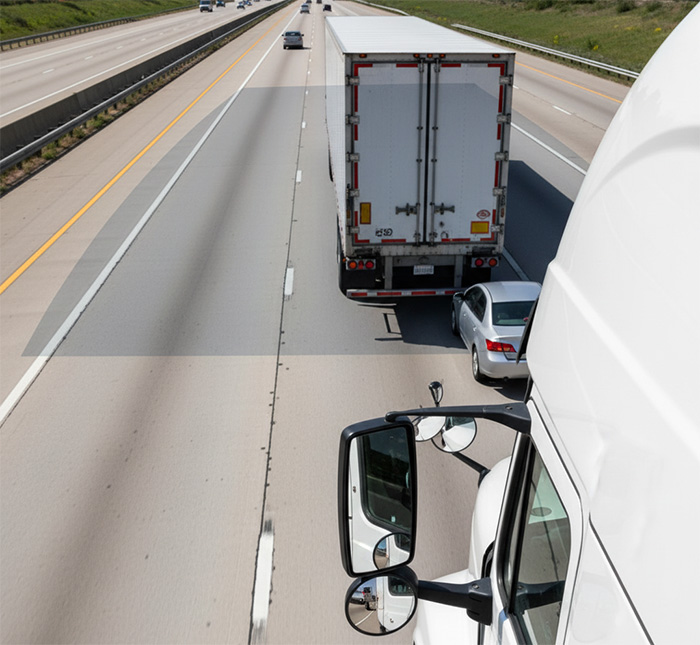
The right steps when changing the lane begin with a full assessment of the mirrors. The main ones and convex ones should be used to see how close the traffic is, how much it is following, and whether there is space available.
Covering the signal procedure first. It is a must to give the signal early enough for the drivers around to react. The signal is essentially the way of warning, not a request.
After this, a blind spot check is obligatory. New drivers frequently skip this step, particularly on the right side. Trucks have long blind spots that no one can overlook.
Once the driver has confirmed that the way is free, the truck should be transferred into the new lane gradually. The supervision of the wheel has to be imperceptible, and the rate of speed must not change. Speeding or being uncertain introduces confusion and increases the risk of crashing.
HOW TO CHANGE LANES IN A TRACTOR-TRAILER TRUCK FOR THE CDL ROAD TEST
These are the essential steps for lane change that beginners must practice consistently.
Lane Changing and Merging Safety Steps
| Phase | Driver Action | Purpose |
| Preparation | Mirror check (both sides) | Assess traffic speed and distance |
| Communication | Signal procedure | Inform surrounding vehicles |
| Verification | Blind spot check | Confirm lane is clear |
| Commitment | Gradual lane movement | Avoid hesitation |
| Stabilization | Maintain steady speed | Prevent confusion during merge |
| Completion | Full lane entry | Safe lane change completed |
Merging and Highway Lane Changes Are Safe When You Acknowledge Proper Techniques
Merging lanes remain one of the most challenging maneuvers for the new truck drivers. Ramps, construction places, and lane closures necessitate the calm dress.
Safe merging depends on planning rather than reaction.
Safe merging always begins with the driver’s plan. Potential gaps need to be spotted ahead of time and the driver should modify his speed to that of the surrounding traffic. Trying to force the merging at the very last moment often results in harsh brakes or bad steering.
A mirror check, a signal procedure, and a blind spot check are still needed. During merging, maintaining the same rate of speed is vital as it will allow other drivers to predict the truck’s next move.
When merging lanes, predictability is more important than speed.
Merely defensive driving while merging knows that not all drivers will yield. Being patient and managing the space are vital.
Driving Checkpoints: A Mental Checklist for Newbies
Beginner driver tips most often fail because they focus on the theory instead of habit. The driving checklist is the best choice because it automates the entire process.
Beginners should first mentally confirm a set of checkpoints before any lane change or turn that is:
- mirrors checked
- signal activated
- blind spot verified
- space confirmed
- speed controlled
These driving checkpoints minimize panic, avoid rushed decisions, and they are the ones that help the driver to keep traffic safety at a high level.
This checklist supports consistent beginner driving behavior.
Common Mistakes of Beginners and Their Prevention
One of the most common mistakes is turning the signal light on late. This late signal eliminates the reaction time needed by other vehicles and people. A typical mistake as well is the blind spot check, which is mainly caused by overconfidence in mirrors.
Beginners also tend to pause during maneuvers. Truck drivers often find it much more dangerous to miss the lane commitment than to be slow and sure.
Clear lane changing steps reduce hesitation and confusion.
At last, many beginners tend to undervalue fatigue. The more fatigue, the shorter mirror checks, and the more delayed decision-making are. Safe driving involves a clear understanding of these limits and taking extra caution.
Defensive Driving as the Foundation of Safe Navigation
Defensive driving means complying with the rules of the road and anticipating the mistakes that you and others may be prone to make. Trucks should bear in mind that cars will misjudge speed and sometimes cut in when they shouldn’t and they might not always signal.
Safe turning and lane-changing aren’t merely exercises in good driving, they are about reducing risk. Each time you do it right, you increase your self-confidence, keep your equipment safe, and internalize your professional driving practices.
Defensive driving turns basic procedures into reliable habits.
The Long-Term Impact of Turning and Lane-Changing the Right Way
The first steps in the learning process of driving always have an effect on fewer incidents, a low-stress atmosphere, and a longer career. Many times, insurance claims, equipment damage, and even near misses are due to the lack of routine basic procedures.
To novice truck drivers, repeating something always is more important than speed. The correct turning and safe merging are two skills which learners develop in a strict environment through regular practice, not through cutting corners.
Final Words
Safe turning and lane changing are not optional skills for a novice truck driver. They are indeed core safety practices that support traffic safety, defensive driving, and professional performance.
Newbies can reduce the risks of turning and merging by following structured driving steps, respecting blind spots, and using clear driving checkpoints.
Mastering these driving maneuvers early sets the foundation for long-term success.
The safe driving approach in trucking demands patience, observation, and consistency. If you master these foundations, every mile you drive will be safer.