
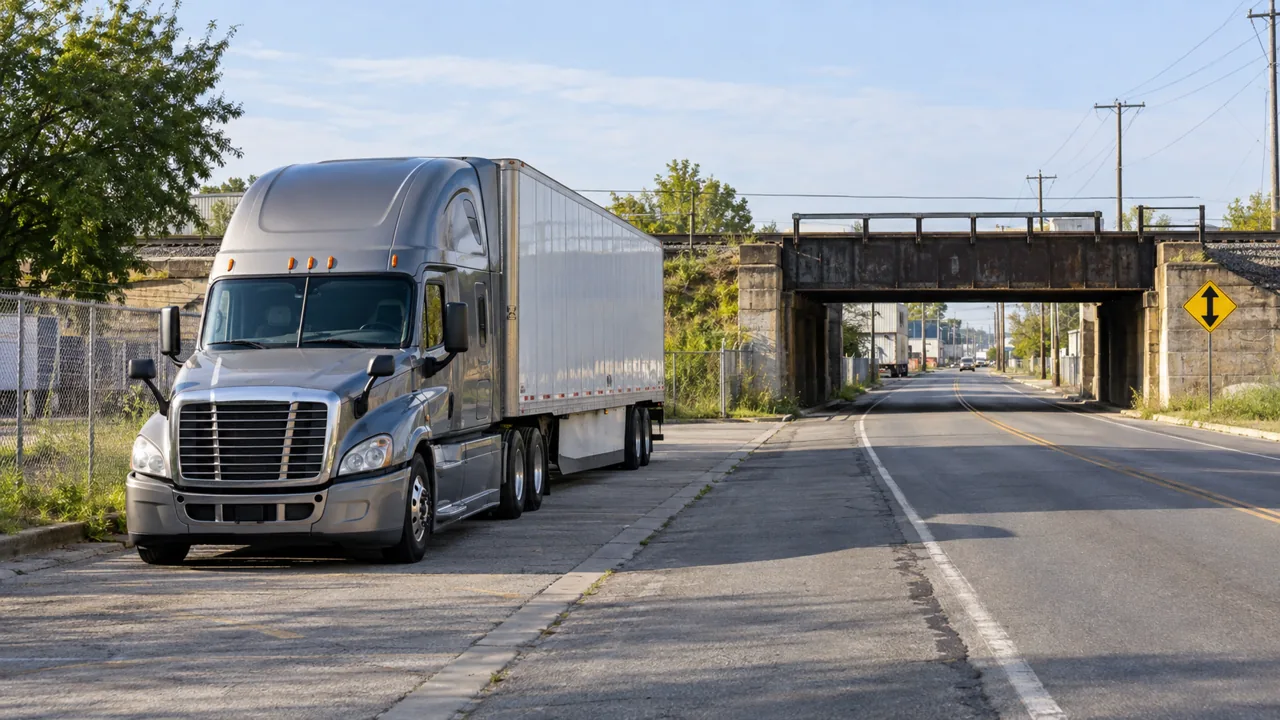
A low bridge problem often starts long before the bridge comes into view. An address is entered into the wrong navigation profile, a driver accepts a passenger-car shortcut, or the final approach to a warehouse is left until the last minute. By the time a clearance sign appears, the truck may already be committed to a narrow street with few turning options. Avoiding that situation takes a deliberate route check, accurate vehicle information, and the willingness to stop before uncertainty turns into a bridge strike.
Know the height of the actual combination
Start with the truck and trailer assigned to the trip rather than a remembered number from a different vehicle. Confirm the height through the carrier's approved information and measurement procedures, including any equipment that changes the highest point. A driver should be able to state the relevant dimensions without searching through several screens at an intersection. Keep the information available for trip planning, and check it again when equipment changes. A trailer swap is a good reason to review the navigation profile before leaving the yard.
Do not use an improvised height adjustment as a way to squeeze beneath a questionable structure. The operational question is whether the combination can use the route normally and lawfully, with the required clearance. Load, suspension behavior, road shape, and surface changes can affect the real situation beneath a structure. If the margin is uncertain, resolve it through the carrier and road authority before approaching. A few minutes spent confirming the route can prevent a recovery operation that occupies a road for hours.
Use commercial navigation correctly
The FMCSA guidance on safe use of GPS navigation systems recommends truck-specific navigation, entering relevant vehicle information before travel, obeying road signs, and keeping maps updated. The important practical point is that a device is only as useful as its profile and the driver's response to the road. Check height, length, weight, and other relevant restrictions when setting up the trip. Confirm that the device remains in the correct vehicle mode after an update or reset.
Prepare the destination while parked. Save the commercial entrance, not merely the building's street address or the center of a large industrial property. If a receiver has a separate employee entrance and truck gate, a generic address pin may lead to the wrong side of the site. Review the approach at a useful scale, noting bridges, railroad crossings, and turns immediately before the gate. Keep the device within easy viewing range without allowing it to obstruct the windshield or become a distraction.
Check the last few miles separately
Highway routing and local access are different planning tasks. A major interstate may accommodate the vehicle comfortably, while the final mile includes older infrastructure or a road that prohibits trucks. Ask the receiver for its current commercial approach and compare that information with official restrictions. A helpful employee may describe the route they drive in a car, so make the vehicle size clear. Confirm which gate accepts trucks and whether construction has changed the usual approach.
Satellite images and street-level pictures can help you understand the layout, but their date and coverage limit what they prove. They cannot establish that a posted clearance or traffic restriction remains unchanged today. Use them to generate questions: is this an underpass, does the turn require extra room, and where can a truck wait if the entrance is closed? Resolve important uncertainties before departure rather than trying to interpret a small image while moving through unfamiliar streets.
Treat roadside signs as a new decision point
A navigation instruction to continue does not cancel a low-clearance sign, truck restriction, or closure. Read warnings early and consider where the road leads beyond them. If a sign conflicts with the planned route, slow appropriately and find a safe place to stop before entering the restricted section. Never use the fact that another truck passed earlier as confirmation. Its dimensions, route, or position on the road may differ from yours, and your own information may be incomplete.
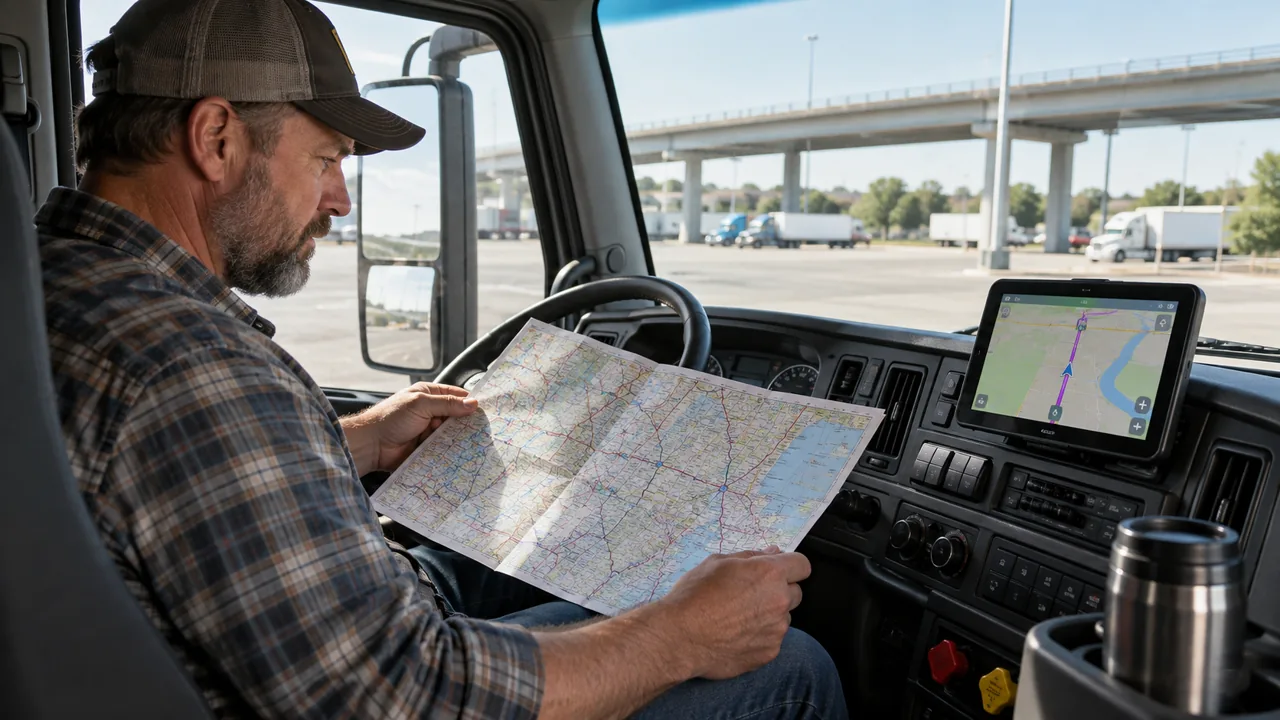
The FMCSA research overview of low-clearance detection describes limitations in navigation databases and the role of warning technology. That is a reason to combine tools with observation, not to abandon navigation altogether. An alerting device can support a driver, but the visible road environment still demands attention. A bridge that looks generous in a photograph can be unsuitable for the actual vehicle or for the part of the roadway available to it.
Handle detours without accepting a car shortcut
Unexpected construction is a common source of route pressure. A detour arrow may serve general traffic without providing a suitable commercial path for every vehicle. Before following a replacement route, confirm whether it applies to your truck and whether it introduces height, weight, or turning restrictions. Contact dispatch or the responsible road authority from a safe stopping point if needed. Record the approved alternative so that each new turn does not become another independent guess.
Avoid the temptation to make an unplanned turn solely because it appears to lead away from congestion. The next street may remove your turning options or place a low structure between the truck and the nearest major road. A useful alternative includes a complete path back to a confirmed suitable route. Review the destination again after the change, since the new approach may enter the industrial area from a different side. Keep the receiver informed if the revised route changes arrival time.
Stop early when clearance becomes uncertain
If you reach a questionable bridge, stop safely before entering it. Do not continue until the trailer touches, rely on a passenger waving from the sidewalk, or attempt an informal test of the gap. Make the vehicle secure and contact the appropriate assistance. Tell dispatch your exact location, the posted information, and the direction from which you approached. If traffic is endangered or the vehicle cannot remain safely in place, involve the relevant road or emergency authority.
Backing away on a public road can create serious risks of its own. Do not improvise a blind reverse movement through traffic. Follow the instructions of qualified assistance and your carrier's procedures for resolving the obstruction. Drivers behind you may not understand why you have stopped, so clear communication is more useful than a rushed maneuver. A recovery decision should account for traffic control, pedestrians, available space, and the entire combination rather than the tractor alone.
Keep useful route knowledge for the next trip
After a route issue is resolved, update the carrier's delivery notes with the approved truck entrance and the reason the original approach failed. Describe the restriction accurately and include the date the information was checked. Avoid turning a one-time workaround into a permanent instruction without review. Construction, access arrangements, and restrictions change, and the next driver may arrive with different equipment. Good notes make the next planning conversation shorter while still leaving room for verification.
A dependable clearance routine has several layers: accurate vehicle dimensions, a correctly configured commercial navigator, a checked local approach, attention to signs, and a safe stopping decision when information conflicts. None is particularly dramatic, but together they prevent the rushed judgment that often precedes a bridge problem. The goal is to reach the correct truck gate without having to discover the limitations of an unfamiliar street from inside it.