
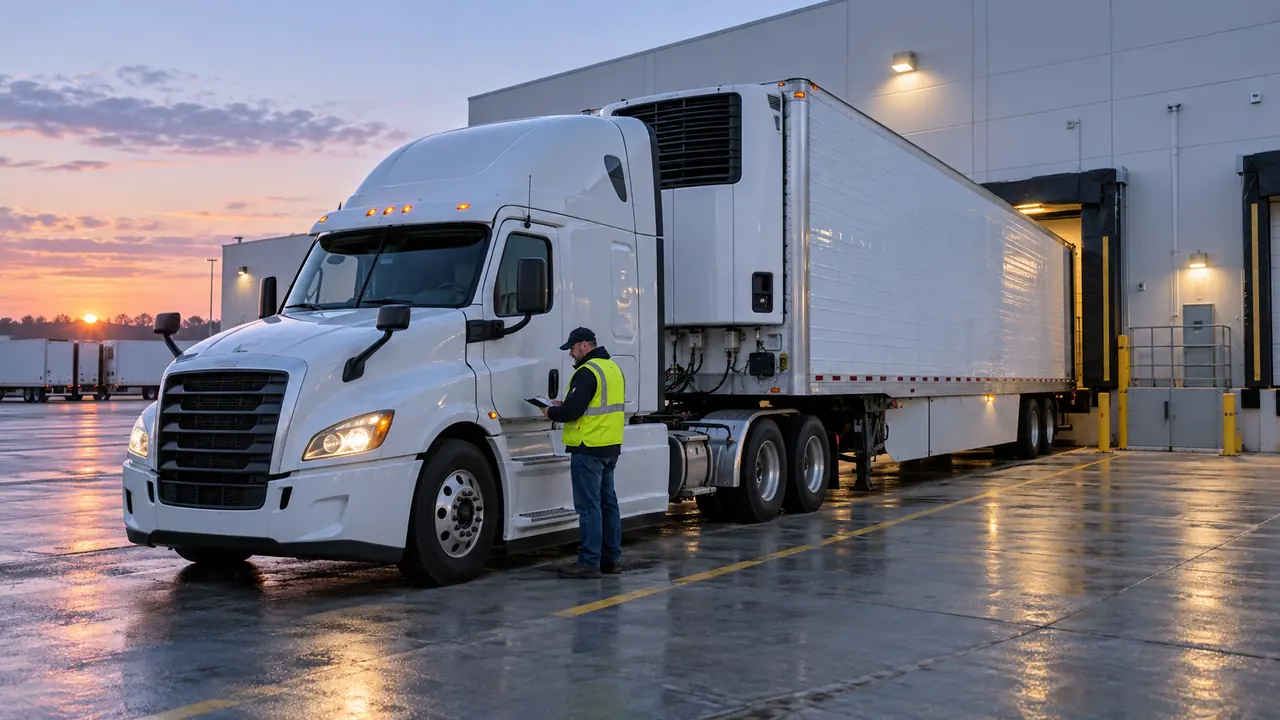
A refrigerated trailer is a moving temperature-control system, not a giant cooler that can repair every loading mistake. A shipment can leave the dock with a correct setpoint and still arrive with warm cartons if the product was loaded hot, the unit was not prepared, the return-air path was blocked, or a fault went unnoticed. For a truck driver, protecting the load means watching the whole process from the shipping door to the receiver's dock.
The exact temperature, operating mode, and monitoring method must come from the shipper's written instructions and the carrier's procedures. Fresh produce, frozen food, pharmaceuticals, and other refrigerated commodities are not interchangeable. A useful routine is to confirm the instructions, prepare the equipment, verify the load, monitor the trip, and report any deviation immediately. This guide focuses on practical decisions a driver can make and document without pretending to replace a food-safety plan or a refrigeration technician.
Start With the Shipment Instructions
Before accepting the trailer, check the bill of lading and any temperature-control instructions. Record the requested setpoint, whether continuous or start-stop operation is required, acceptable temperature range if one is specified, pickup and delivery appointments, seal requirements, and who to call about an alarm. If the paperwork and the controller disagree, stop and ask the shipper or dispatcher to resolve the difference before leaving.
Do not choose a familiar number from a previous load. Different products can be damaged by either warmth or freezing. Some fresh produce is sensitive to chilling; frozen products have different requirements from chilled products. The FDA's sanitary transportation overview makes clear that equipment and transportation operations must be appropriate for the particular food being carried. The contract and shipper specifications establish the practical target for that trip.
Inspect and Pre-Cool the Trailer
Walk around the trailer before loading. Look at the doors, seals, hinges, roof, walls, floor, drain openings, and refrigeration unit. A torn door gasket or damaged panel can let warm air in, while debris or odors can make the trailer unsuitable for food. Verify fuel level and check the reefer unit for active alarms or overdue service according to carrier policy. A clean, intact trailer is easier to cool and easier to defend if a condition is questioned later.
Pre-cooling matters when the shipper specifies it. Set the unit and allow the empty compartment to reach the required condition before freight is loaded, while following dock rules about engine operation. The FDA's sanitary transportation FAQ explains that, for food requiring temperature control for safety, the loader must verify that the refrigerated compartment is adequately prepared, including proper pre-cooling when necessary. Where a written shipper-carrier agreement assigns duties to the carrier, the carrier has related obligations.
Pre-cooling the air does not mean the reefer can rapidly chill warm pallets. The equipment is mainly designed to maintain cargo at the proper shipping temperature. If product appears warm, the dock is delayed, or doors remain open for an extended time, ask for a product-temperature check under the shipper's procedure. Record the result and instruction received rather than assuming that a cold display proves the product itself is cold.
Separate Setpoint, Return Air, and Product Temperature
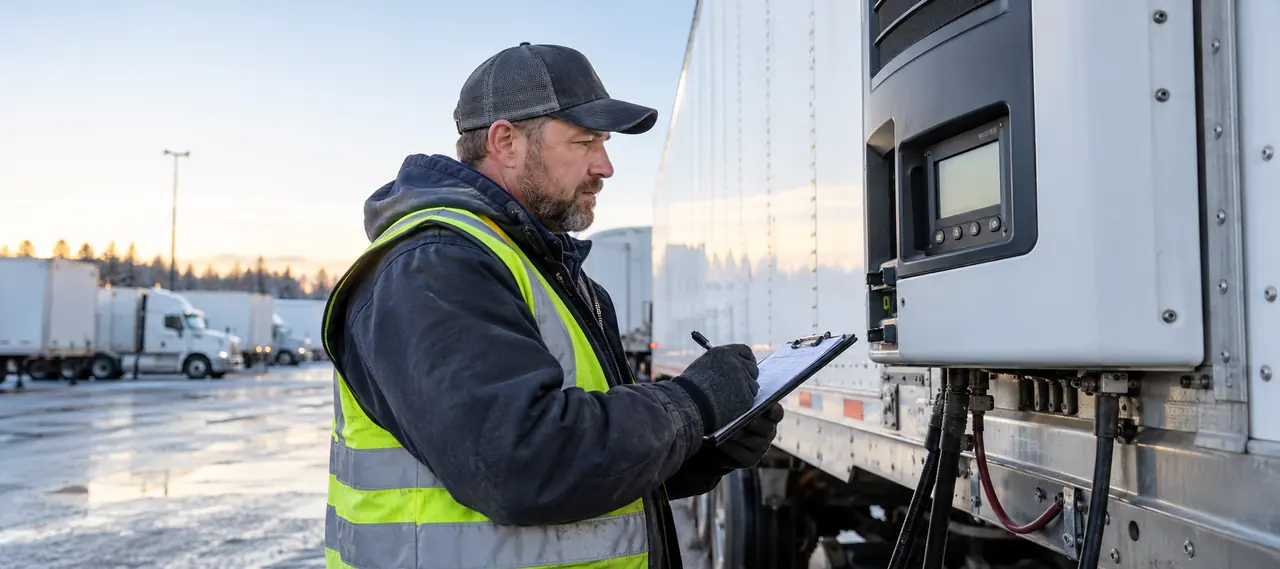
The setpoint is the target entered into the controller. Return-air temperature measures air coming back to the refrigeration unit, and supply-air temperature measures air being sent into the trailer. Neither number automatically tells you the temperature at the center of every pallet. After doors open or a defrost cycle starts, air readings can change quickly without proving that the freight has warmed to the same degree.
Drivers should understand which reading their equipment displays and what is normal for that unit. Some shipments use independent data loggers or probes placed by the shipper. If a product-temperature reading is needed, it should be taken by authorized personnel using the appropriate method. Do not puncture packaging, handle food unnecessarily, or guess from the air display. The FDA's rule summary notes that the shipper and carrier may agree on a temperature-monitoring mechanism for food that requires temperature control for safety.
Protect Airflow During Loading
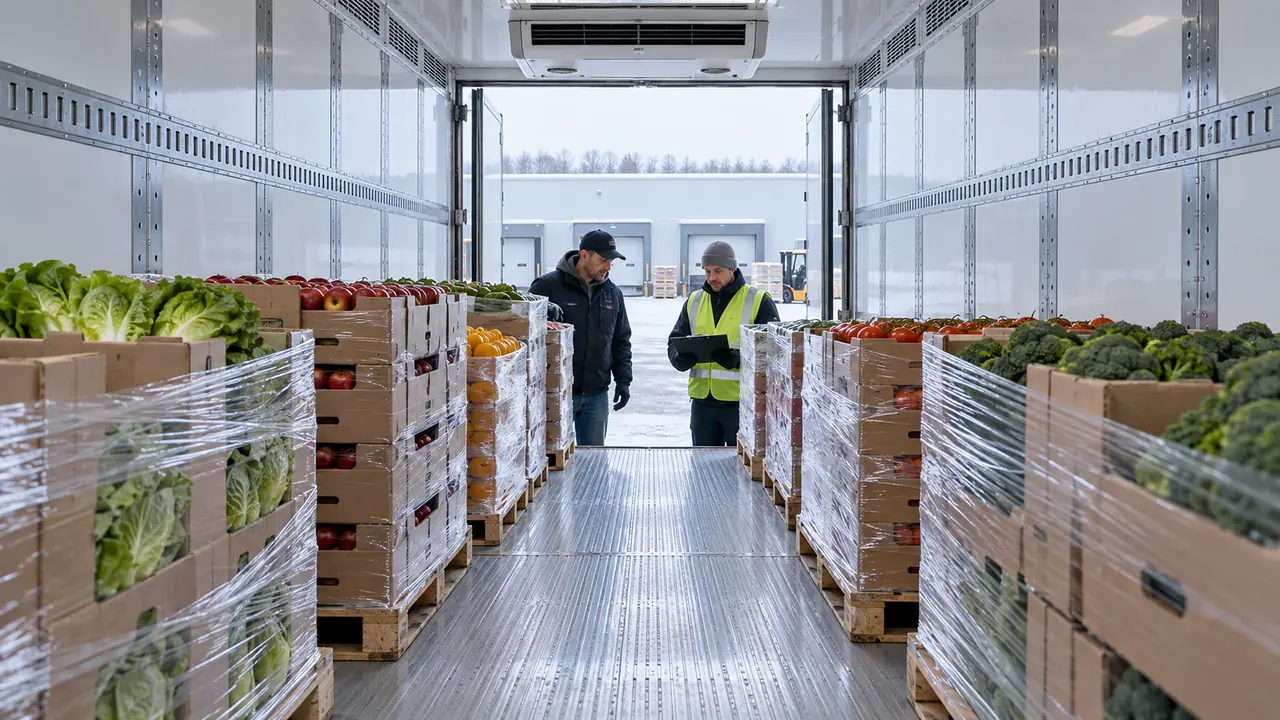
A reefer needs air to circulate around the load and return to the unit. Freight pressed into the ceiling, rear doors, or air chute can prevent even cooling. Keep the floor channels, return-air opening, and load-line markings clear according to the trailer design and loading plan. The USDA's transport handbook also discusses preparing the compartment and using proper loading practices for produce. Ask the dock team to correct crushed packaging, unstable stacks, or pallets that block the airflow path before the doors are sealed.
Loading practices also affect contamination risk. Raw products, ready-to-eat goods, allergens, chemicals, and previous cargo may need separation or specific cleaning procedures. The FDA rule addresses sanitation and protection from cross-contact as well as temperature. A driver should not accept an obviously unsuitable trailer or a load arrangement that conflicts with the shipper's instructions simply because the schedule is tight.
Take clear notes at pickup: trailer number, unit number, setpoint, operating mode, fuel level, observed trailer condition, loading completion time, seal number, and any exception reported to dispatch. If the shipper provides a product-temperature record or logger ID, keep it with the load documents. A concise record is far more useful than trying to reconstruct events after a disputed delivery.
Monitor the Unit on the Road
Make reefer checks part of planned fuel and rest stops. Look at the controller status, current readings, setpoint, mode, fuel, and any alarm history. Compare them with the pickup record and the shipment instructions. If telematics sends alerts to dispatch, that is useful backup, but it does not remove the driver's need to notice visible faults or report a change in operating condition.
Avoid opening the trailer just to "check the cold." Every opening admits outside air and can disturb a secured load or seal. If there are multiple delivery stops, coordinate door time with the receiver and close the doors promptly. After each stop, verify that the unit is running in the required mode, the doors are latched, and the remaining freight is still properly secured with airflow preserved.
A long delay, very hot weather, a breakdown, or a low fuel level should trigger closer attention. Monitor the trend, not only a single number. One brief reading outside the expected range may be related to a normal cycle, but a persistent increase, repeated alarm, or unit shutdown needs action. Do not silence an alarm and continue without understanding its cause.
Respond to Temperature Deviations Quickly
If the unit stops cooling or readings move beyond the agreed range, find a safe place to stop and check for a simple issue the carrier authorizes you to address, such as an incorrect mode or low fuel. Do not bypass a safety shutdown or attempt an unapproved repair. Call dispatch and the designated temperature-control contact with the location, time, setpoint, displayed readings, alarm code, fuel level, and approximate time since the last normal check.
Keep the trailer doors closed unless instructed otherwise. Ask whether mobile service, a replacement trailer, a nearby cold-storage facility, or a controlled transfer is needed. Decisions about food safety or cargo disposition belong to the responsible shipper, receiver, and carrier under their procedures. A driver should preserve evidence and follow instructions rather than declaring the freight safe or spoiled based solely on a controller reading.
Document the timeline: when the deviation was first seen, whom you contacted, instructions received, repairs or transfers completed, and when normal operation resumed. If the load includes an independent logger, preserve its data. The FDA's FAQ describes circumstances in which a carrier may be asked to demonstrate that temperature conditions consistent with the shipper's operating temperature were maintained during transportation. Good records protect both the shipment and the driver.
Make Delivery a Clean Handoff
At the receiver, confirm the dock assignment and any requirements for shutting down or keeping the reefer running. Record arrival time, controller reading, seal condition, and any exceptions before opening. If the receiver measures product temperature, note the result and who performed the check. Disputes are easier to resolve when both sides can compare the same timeline and monitoring data.
Do not adjust the setpoint just before delivery to make a display look better. It will not reverse a temperature excursion and can obscure what happened. If a problem occurred, state it accurately and provide the records requested through carrier procedure. After unloading, inspect the trailer for damage, spills, packaging debris, and odor so the next shipment does not inherit an avoidable problem.
Quick Reefer Load Checklist
- Confirm the shipper's temperature, range, mode, monitoring, and seal instructions.
- Inspect the trailer, unit, doors, sanitation, fuel, and alarm status.
- Pre-cool when required and verify that the product is suitable to load.
- Keep air channels clear and document pickup conditions.
- Check the controller and fuel at regular safe stops without unnecessary door openings.
- Report persistent deviations or shutdowns immediately and preserve the timeline.
- Record delivery readings, seal condition, and any receiver exception.
Reliable cold-chain delivery comes from a series of small, documented decisions. The driver cannot control every factor at the shipper's dock, but can confirm the instructions, recognize a poor loading condition, watch the equipment, and speak up before a manageable deviation becomes a lost load.